


Our Goal
TC-CCS aims to develop into a globally recognized community for research, education, and professional collaboration in complex systems and cybernetics. Building on its interdisciplinary scope, the committee will focus on practical methods, shared technical resources, and collaborative activities that connect theory with real-world applications. By bringing together universities, research institutions, and industries worldwide, TC-CCS will address problems that are difficult to solve using traditional methods. Within the next five years, we will: (i) continue and expand the IEEE Symposium on Complex Systems and Cybernetics as a premier international conference series; (ii) organize special sessions at IEEE SMC annual conferences and promote special issues in relevant IEEE journals; (iii) host regular webinars and tutorials to support students, young professionals, and researchers; (iv) promote reproducible research by releasing open-source tools, benchmark datasets, and simulation platforms for applications such as intelligent transportation, energy management, smart manufacturing, biomedical systems, and socio-economic systems; and (v) facilitate three or more international collaborative projects. TC-CCS will recruit scholars, students, and industry practitioners working on complex systems, cybernetics, and related interdisciplinary topics, with special attention to engaging young researchers in conference organization, publication editing, and open-source project development. The committee brings together expertise in automatic control, computer science, information science, systems engineering, mathematics, space engineering, power engineering, and IoT technologies, and involves universities, companies, and research institutes. This broad technical and institutional base will support TC-CCS in building a sustainable community and strengthening the IEEE SMC Society’s role in complex systems and cybernetics.
Join Us
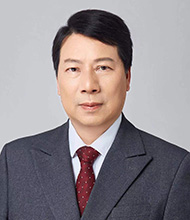
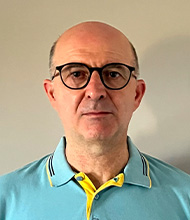
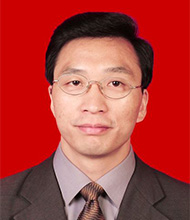
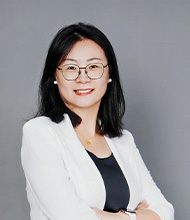
Join TC-CCS to advance research, education, and collaboration in complex systems and cybernetics. TC-CCS welcomes researchers, students, young professionals, and industry practitioners interested in modeling, control, optimization, simulation, data-driven analysis, and applications of complex systems. Members will have opportunities to participate in TC activities such as conferences, special sessions, webinars, tutorials, publications, open-source projects, and international collaborative initiatives. TC-CCS also aims to provide a platform for exchanging research ideas, building professional networks, and promoting interdisciplinary collaboration across academia and industry. If you would like to become involved in TC-CCS activities, please contact the Chair, Prof. Feiqi Deng, or any Co-Chair.
IEEE SMC membership is strongly encouraged.
Additional Background for TC-CCS
TC-CCS builds upon a long-standing academic activity and an established international network. Since 2008, the IEEE CSS & SMC Guangzhou Chapter has organized the IEEE Symposium on Complex Systems and Cybernetics 15 times, attracting hundreds of participants from Asia-Pacific, Europe, and North America. This symposium series will serve as the flagship academic conference series of TC-CCS, with the long-term ambition of growing from hundreds of participants to a broader international community, potentially exceeding one thousand participants. Building on this foundation, TC-CCS will develop a range of academic and technical activities, including special sessions and thematic tracks at IEEE SMC conferences, as well as webinars, tutorials, and online seminars for students, young researchers, scholars, and industry practitioners. These activities will provide opportunities for training, technical exchange, and collaboration on emerging topics in complex systems and cybernetics. TC-CCS will also pursue high-impact publications, including special issues, invited sections, and review articles in relevant IEEE journals. Open science will be another priority, centered on open-source simulation tools and benchmark datasets that improve the reproducibility and verifiability of research outcomes. These resources are expected to support reproducible experiments, cross-method comparison, and performance evaluation for modeling, control, optimization, and simulation of representative complex systems. TC-CCS members also bring expertise in cyber-physical traffic and mobility systems, data-driven optimization, complex dynamic systems, urban resilience, agent-based modeling, and digital twins. This expertise will enrich the committee’s activities on smart cities, transportation, intelligent manufacturing, and sustainable development. TC-CCS will collaborate with other IEEE SMC Technical Committees, including those related to intelligent systems, computational intelligence, and distributed systems, to co-organize cross-thematic events and joint research activities while avoiding overlap and promoting resource sharing. Where appropriate, it will also seek cross-Society collaboration with IEEE communities in control, robotics, and systems engineering. Geographically, the leadership and membership of TC-CCS cover Asia-Pacific, Europe, and North America, including China, Japan, Italy, France, the United Kingdom, and the United States. The committee is also organized to meet IEEE SMC Society expectations on gender balance, chair eligibility, and membership composition. Its chair/co-chair team includes female representation; all TC chairs are IEEE SMC members, and at least half of its members are IEEE SMC members. This international network, together with sustained technical activities, will help TC-CCS address global challenges such as climate change, urbanization, intelligent manufacturing, and sustainable infrastructure, while enhancing the academic diversity, reputation, and global influence of the IEEE SMC Society.
TC Leadership