



IEEE SMCS Hall of Honor
Many IEEE SMC members have made significant contributions to the success of the Society over the years. To recognize these colleagues, the Society has established the IEEE SMCS Hall of Honor.
The Hall of Honor celebrates individuals, living or deceased, who have made one or more major contributions to the Society. These contributions may include distinguished volunteer service as well as the creation, development, or advancement of the Society’s technical objectives.
Email: [email protected] |
Saeid Nahavandi
Volunteering activity: – President (Jan 2026 – Dec 2027)
– President-Elect (Jan 2025 – Dec 2025)
– Vice President – Human-Machine Systems (Jan 2022 – Dec 2023)
– Editor-in-Chief – IEEE Systems, Man, and Cybernetics Magazine (Jan 2019 – Dec 2022)
– Editor-in-Chief – SMC E-Newsletter (Jan 2020 – Dec 2020)
– General Chair SMC 2021 (Jan 2021 – Dec 2021)
– Member at Large (Jan 2019 – Dec 2021)
Bio: Saeid Nahavandi (Fellow, IEEE) received a Ph.D. degree in Control engineering from Durham University, Durham, U.K., in 1991. Distinguished Professor Saeid Nahavandi is Swinburne University of Technology’s inaugural Associate Deputy Vice-Chancellor Research, Melbourne, VIC, Australia and Chief of Defence Innovation. He has authored or coauthored more than 1400 scientific papers in various international journals and conferences. His research interests include autonomous systems, modeling of complex systems, robotics, and haptics.,Prof. Nahavandi holds six patents, two of which have resulted in two very successful start-ups (Universal Motion Simulation Pty, Ltd., and FLAIM Systems Pty, Ltd.). He was the recipient of the Clunies Ross Entrepreneur of the Year Award 2022 from the Australian Academy of Technological Sciences and Engineering, Researcher of the Year for Australian Space Awards 2021, Australian Defence Industry Awards—Winner of Innovator of the year, The Essington Lewis Awards, and Australian Engineering Excellence Awards—Professional Engineer of the Year. Professor Nahavandi AO was appointed as an Officer of the Order of Australia in January 2026. |

Email: [email protected] |
Adrian Stoica
Volunteering activity: – President (Jan 2024 – Dec 2025)
– President-Elect (Jan 2023 – Dec 2023)
– Vice President – Systems Science & Engineering (Jan 2019 – Dec 2022)
– Vice President – Membership & Student Activities (Jan 2017 – Dec 2018)
– General Chair SMC 2023 (Jan 2023 – Dec 2023)
Bio: Adrian Stoica, PhD is a Senior Research Scientist and Principal at NASA Jet Propulsion Laboratory (JPL). During his over 25 years at JPL he was Principal Investigator for many government projects funded by NASA and other agencies. He supervised the JPL Robotic Systems Decision, Estimation, and Controls group for 10 years, and is now Program Manager in the Office of Strategic Planning. He joined IEEE in 1992 and has volunteered in several IEEE societies and units; he served twice as Vice-President of the IEEE Systems, Man, and Cybernetics Society. Adrian is a NASA Innovative Advanced Concepts (NIAC) Fellow. He founded 3 conferences on adaptive systems for space, quality of life, and secure technologies. His expertise and passion covers several areas including intelligent machines, telepresence, robotics, human-machine systems and space exploration. |
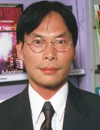
Email: [email protected] |
Sam T Kwong
Volunteering activity: – President (Jan 2022 – Dec 2023)
– President-Elect (Jan 2021 – Dec 2021)
– Junior Past President (Jan 2024 – Dec 2025)
– Vice President – Cybernetics (Jan 2018 – Dec 2021)
– Vice President – Conferences & Meetings (Jan 2016 – Dec 2017)
– General Chair SMC 2015 (Jan 2015 – Dec 2015)
– Member at Large (Jan 2013 – Dec 2014)
Bio: Sam Kwong (Fellow, IEEE) received the B.S. degree in electrical engineering from the State University of New York, Buffalo, in 1983, the M.S. degree in electrical engineering from the University of Waterloo, Waterloo, ON, Canada, in 1985, and the Ph.D. degree from the University of Hagen, Germany, in 1996. From 1985 to 1987, he was a Diagnostic Engineer with Control Data Canada. He joined Bell Northern Research Canada as a Scientific Staff Member. In 1990, he became a Lecturer with the Department of Electronic Engineering, City University of Hong Kong, Hong Kong, China. Later, he was a Chair Professor with the Department of Computer Science, City University of Hong Kong. He is currently a Chair Professor with the School of Data Sciences, Lingnan University, Hong Kong. His research interests include video and image coding and evolutionary algorithms. He is an Associate Editor for IEEE Transactions on Industrial Electronics and IEEE Transactions on Industrial Informatics. He is a Fellow of the Canadian Academy of Engineering. |
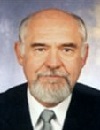
Email: [email protected] |
Imre J Rudas
Volunteering activity: – President (Jan 2020 – Dec 2021)
– President-Elect (Jan 2019 – Dec 2019)
– Junior Past President (Jan 2022 – Dec 2023)
– Senior Past President (Jan 2024 – Dec 2025)
– Vice President – Membership & Student Activities (Jan 2015 – Dec 2016)
– General Chair SMC 2016 (Jan 2016 – Dec 2016)
Bio: Imre J. Rudas (Life Fellow, IEEE) received the Graduation degree in mechanical engineering from Bánki Donát Polytechnic, Budapest, Hungary, in 1971, the master’s degree in mathematics from Eötvös Loránd University, Budapest, in 1977, and the Ph.D. degree in robotics and the Doctor of Science degree in electrical engineering from the Hungarian Academy of Sciences, Budapest, in 1987 and 2004, respectively.,He is a Professor Emeritus with Óbuda University, Budapest, where he is the President of the University Research and Innovation Center. He has published 22 books, over 850 papers in various journals and international conference proceedings, and received over 7500 citations. His research interests include computational cybernetics, robotics, and computational intelligence.,Prof. Rudas was the President of the IEEE Systems, Man, and Cybernetics Society from 2020 to 2021. He serves as an associate editor of some scientific journals, a member of editorial board of Journal of Advanced Computational Intelligence and Intelligent Informatics, and a member of various national and international scientific committees. |

Email: [email protected] |
Edward Tunstel Jr
Volunteering activity: – President (Jan 2018 – Dec 2019)
– President-Elect (Jan 2017 – Dec 2017)
– Junior Past President (Jan 2020 – Dec 2021)
– Senior Past President (Jan 2022 – Dec 2023)
– Vice President – Systems Science & Engineering (Jan 2011 – Dec 2014)
Awards: Bio: Robotics engineer and technology developer Edward Tunstel, Jr. was born on November 29, 1963 in Harlem, New York to Agnes Tunstel and Edward Tunstel, Sr. As a child, Tunstel was very interested in art, which led him to pursue an initial interest in architecture. However, after he attended a seminar held by the New York Academy of Sciences the summer of his junior year in high school, he decided to shift his focus to engineering instead due to his curiosity in learning how things worked. He graduated from Springfield Gardens High School in Queens, New York in 1981 and received his B.S. and M.E. degrees in mechanical engineering from Howard University in 1986 and 1989, respectively. |

Email: [email protected] |
Dimitar P Filev
Volunteering activity: – President (Jan 2016 – Dec 2017)
– President-Elect (Jan 2015 – Dec 2015)
– Junior Past President (Jan 2018 – Dec 2019)
– Senior Past President (Jan 2020 – Dec 2021)
– Vice President – Publications (Jan 2024 – Dec 2024)
Awards: Bio: Dimitar Filev, Henry Ford Technical Fellow, Ford Research and Innovation Center, is known for his research in computational intelligence, AI and intelligent control and their applications to autonomous driving, vehicle systems and automotive engineering. His research has had significant impact in automotive research and practice in the fields of intelligent information and control systems. |
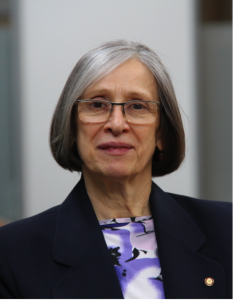
Email: [email protected] |
Ljiljana Trajkovic
Volunteering activity: – President (Jan 2014 – Dec 2015)
– Junior Past President (Jan 2016 – Dec 2017)
– Senior Past President (Jan 2018 – Dec 2019)
– Editor-in-Chief – IEEE Transactions on Human-Machine Systems (Jan 2021 – Dec 2025)
Awards: Bio: Ljiljana Trajkovic received the Dipl. Ing. degree from the University of Pristina, Yugoslavia, the M.Sc. degree in electrical engineering and computer engineering from Syracuse University, Syracuse, NY, and the Ph.D. degree in electrical engineering from the University of California at Los Angeles. She is currently a professor in the School of Engineering Science, Simon Fraser University, Burnaby, British Columbia, Canada. Her research interests include communication networks and dynamical systems. She served as IEEE Division X Delegate/Director and President of the IEEE Systems, Man, and Cybernetics Society and the IEEE Circuits and Systems Society. Dr. Trajkovic serves as Editor-in-Chief of the IEEE Transactions on Human-Machine Systems and Associate Editor-in-Chief of the IEEE Open Journal of Systems Engineering. She is a Distinguished Lecturer of the IEEE Circuits and System Society and the IEEE Systems, Man, and Cybernetics Society and a Fellow of the IEEE. |
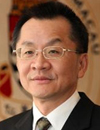
Email: [email protected] |
C L Philip Chen
Volunteering activity: – President (Jan 2012 – Dec 2013)
– Junior Past President (Jan 2014 – Dec 2015)
– Senior Past President (Jan 2016 – Dec 2017)
– Editor-in-Chief – IEEE Transactions on Systems, Man, and Cybernetics: Systems (Jan 2017 – Dec 2019)
– Editor-in-Chief – IEEE Transactions on Cybernetics (Jan 2021 – Dec 2021)
Awards: Bio: C. L. Philip Chen is the Chair Professor and Dean of the College of Computer Science and Engineering, South China University of Technology. He is a Fellow of IEEE, AAAS, IAPR, CAA, and HKIE; a member of Academia Europaea (AE), and a member of European Academy of Sciences and Arts (EASA). He received IEEE Norbert Wiener Award in 2018 for his contribution in systems and cybernetics, and machine learnings, and IEEE Joseph G. Wohl Outstanding Career award, and received two times best transactions paper award from IEEE Transactions on Neural Networks and Learning Systems for his papers in 2014 and 2018 and he is a highly cited researcher by Clarivate Analytics from 2018-2022. His current research interests include cybernetics, systems, and computational intelligence. |

Email: [email protected] |
Michael R Berthold
Volunteering activity: – President (Jan 2010 – Dec 2011)
– Senior Past President (Jan 2014 – Dec 2015)
Bio: Michael Berthold is professor at Konstanz University and Co-Founder and President of KNIME.com AG. He held positions in both academia and industry most notably at CMU, UC Berkeley, Intel, and Tripos. His research focuses on descriptive data analysis often triggered by applications in the life sciences. |
Email: [email protected] |
Daniel S Yeung
Volunteering activity: – President (Jan 2008 – Dec 2009)
– General Chair SMC 2015 (Jan 2015 – Dec 2015)
Bio: Daniel S. Yeung (Life Fellow, IEEE) received the Ph.D. degree in applied mathematics from Case Western Reserve University, Cleveland, OH, USA, in 1974.,He was an Assistant Professor of mathematics and computer science with the Rochester Institute of Technology, Rochester, NY, USA, as a Research Scientist with the General Electric Corporate Research Center, USA, and as a System Integration Engineer with TRW, USA. He was a Visiting Professor with the School of Computer Science and Engineering, South China University of Technology, Guangzhou, China, from 2008 to 2015. He was the Chairman of the Department of Computing, The Hong Kong Polytechnic University, Hong Kong, and a Chair Professor from 1999 to 2006. His current research interests include neural-network sensitivity analysis, data mining, and big data analytic.,Dr. Yeung is the Past President of the IEEE Systems and the Man and Cybernetics Society. He is the Co-Editor-in-Chief of the Springer International Journal on Machine Learning and Cybernetics. |
Email: [email protected] |
Lawrence O Hall
Volunteering activity: – President (Jan 2006 – Dec 2007)
Awards: Bio: Lawrence O. Hall (Life Fellow, IEEE) received the B.S. degree in applied mathematics from Florida Institute of Technology, in 1980, and the Ph.D. degree in computer science from Florida State University, in 1986. He is currently a Distinguished University Professor with the Department of Computer Science and Engineering, University of South Florida. He has authored or co-authored over 85 publications in journals and many conference papers and book chapters. He has received over $5M in research funding from agencies, such as the National Science Foundation, the National Institutes of Health, the Department of Energy, DARPA, and NASA. His research interests include learning from big data, distributed machine learning, medical image understanding, bioinformatics, pattern recognition, and integrating AI into image processing. He is a fellow of AAAS, AIMBE, and IAPR. He received the Norbert Wiener Award and the Joseph Wohl Award from the IEEE SMC Society, in 2012 and 2017, respectively. |
 |
William A. Gruver † In memoriamVolunteering activity: – President (Jan 2004 – Dec 2005)
– General Chair SMC 2014 (Jan 2014 – Dec 2014)
Bio: Born July 13, 1941 in Harrisburg, PA, Bill was the son of William J. and Cecilia M. (Uhler) Gruver. From a young age Bill surrounded himself with music: playing the piano, organ, and tuba and singing in glee clubs and church choirs. He also demonstrated an interest in the sciences, to the point of blowing up his chemistry set while in junior high school. He graduated from John Harris High School, and the University of Pennsylvania with a Bachelor of Science in Electrical Engineering. While at university he was a member of the Navy ROTC. He went on to receive his Masters from the Imperial College of Science and Technology, London, and returned to serve his country in the US Navy by teaching at the US Naval Academy, Annapolis, MD. He was honourably discharged and went back to the University of Pennsylvania for a second Masters and a PhD in Electrical Engineering. |

Email: [email protected] |
Michael H Smith
Volunteering activity: – President (Jan 2002 – Dec 2003)
Awards: Bio: Michael H. Smith (Senior Member, IEEE) received the first M.S. degree in engineering, the second M.S. degree in business administration, and the Ph.D. degree in engineering from the University of California at Berkeley, Berkeley, CA, USA, in 1976, 1976, and 1994, respectively.,He is currently the Chairman of the Board of Furaxa, Inc., Orinda, CA, USA, a biotech company. His research interests include brain–computer interface systems, AI, and robotics.,Dr. Smith was a recipient of the IEEE SMC Joseph G. Wohl Outstanding Career Award. He has served as the Honorary General Chair, Chair, or the Co-Chair of the first ten IEEE SMC Workshops on Brain–Machine Interface Systems. He serves on the Advisory Board of UC Berkeley’s Center for Neural Engineering and Prostheses. He is also a Senior Advisor of the IEEE Brain Initiative. He served as the President of the Intelligent Robotics Corporation, the IEEE Systems, Man, and Cybernetics Society from 2002 to 2003, and the North American Fuzzy Information Processing Society |
Email: [email protected] |
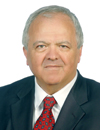
Tadahiko Murata
Volunteering activity: – Vice President – Organization & Planning (May 2022 – Dec 2025)
– Member at Large (Jan 2017 – Dec 2020)
Bio: Tadahiko Murata (IEEE Fellow) received his B.S., M.S., and Ph. D degrees from Osaka Prefecture University, Osaka, Japan in 1994, 1996, and 1997, respectively. He joined the Department of Industrial Engineering in Ashikaga Institute of Technology in 1997, then moved to Department of Informatics in Kansai University in 2001. He became a full professor at Kansai University in 2009. He then moved to Osaka University in 2023 as a full professor. In Osaka University, he is working for Cybermedia Center that is a supercomputing center not only for university researchers but also for public usages. He is giving classes at Graduate School of Information Science and Technology, and Undergraduate School of Engineering. His interests include multi-objective optimization, social simulations, digital twin, and high-performance computing. He was a member of Board of Governors in IEEE SMC Society from 2015 to 2020, President of Japanese Society for Evolutionary Computation from 2020 to 2022, currently Vice President for Organization and Planning, IEEE SMCS from 2022 to 2025, and Vice President of Japan Society for Fuzzy Theory and Intelligent Informatics from 2023 to 2026. |
Email: [email protected] |
Okyay Kaynak
Volunteering activity: – Vice President – Organization & Planning (Jan 2022 – Dec 2023)
– Member at Large (Jan 2017 – Dec 2021)
Bio: Okyay Kaynak (SM’90-F’03)received a B.Sc. degree with first-class honors and a Ph.D. in electronic and electrical engineering from the University of Birmingham, UK, in 1969 and 1972, respectively. From 1972 to 1979, he held various positions within the industry. In 1979, he joined Bogazici University, Istanbul, Turkey, where he is currently a Professor Emeritus. He has held long-term (near to or more than a year) Visiting Professor/Scholar positions at various institutions in Japan, Germany, the U.S., Singapore, and China. His current research interests are in intelligent control and industrial AI applications. He has authored four books, edited five, and authored or co-authored more than 450 papers that have appeared in various journals and conference proceedings. Dr. Kaynak has served as the Editor in Chief of IEEE Trans. on Industrial Informatics and IEEE/ASME Trans. on Mechatronics, as well as Co-Editor in Chief of IEEE Trans. on Industrial Electronics. Presently he serves as the Editor in Chief of IEEE Trans. on Industrial Cyber-Physical Systems In 2016, he received the Chinese Governments Friendship Award and Humboldt Research Prize. in 2020, the International Research Prize from the Turkish Academy of Sciences. He is a member of this Academy. Most recently, he was cited as the Fellow of Asia-Pacific Artificial Intelligence Association (2023), the Fellow of Industry Academy within the International Artificial Intelligence Industry Alliance (2024) and the Fellow of the Asian Control Association (2024). |

Email: [email protected] |
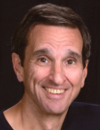
Vladimir Marik
Volunteering activity: – Vice President – Organization & Planning (Jan 2018 – Dec 2021)
– Vice President – Cybernetics (Jan 2014 – Dec 2017)
– General Chair SMC 2022 (Jan 2022 – Dec 2022)
Bio: Vladimír Mařík (1952), Professor of Control Engineering, Scientific Director of the Czech Institute of Informatics, Robotics and Cybernetics (CIIRC) of CTU and Vice-Chair of the R&D&I Council of the Czech Republic. He founded the Department of Cybernetics at CTU (1999-2013) -EU Center of Excellence. Since 2013 he is engaged as a Founder, Director and later Scientific Director of CIIRC. He also acted as Director of the Rockwell Automation Research Center (1992-2009). His fields of interest include Pattern Recognition, AI, and Robotics with the focus to industrial needs. He is a author or co-author of 16 books, 160 journal papers and 4 US patents. IEEE Fellow since 2019. |
Email: [email protected] |
Christopher P. Nemeth
Volunteering activity: – Vice President – Organization & Planning (Jan 2016 – Dec 2017)
– Vice President – Human-Machine Systems (Jan 2015 – Dec 2015)
Bio: Chris Nemeth is a Professor of Statistical Machine Learning in the Department of Mathematics and Statistics at Lancaster University. He is interested in problems pertaining to Bayesian machine learning and computational statistics, with a particular focus on Markov chain Monte Carlo and sequential Monte Carlo techniques. His current research is focused on Bayesian methods for large-scale datasets and tools for online learning. He also works on problems related to Gaussian processes and network modelling. Chris currently holds a UKRI-EPSRC Turing AI Fellowship on Probabilistic Algorithms for Scalable and Computable Approaches to Learning (PASCAL) and formerly an EPSRC Innovation Fellowship on Scalable and Exact Data Science for Security and Location-based Data. Chris is currently the chair of the Computational Statistics and Machine Learning section of the Royal Statistical Society and Associate Editor for the journals Data-Centric Engineering and Probabilistic Machine Learning. |
 |
Irv Engelson † In memoriamVolunteering activity: – Vice President – Organization & Planning (Jan 2014 – Dec 2015)
Bio: Dr. Irving Engelson, a native of Lithuania, moved to the United States after the Second World War. After briefly serving in the US Army, Engelson took a position with RCA, most notably as a teacher at the RCA Institute. After he completed his education he taught briefly in colleges in New Jersey, before taking up a position as an engineering Dean at the University of Nebraska at Omaha. He later transitioned from academia to several administrative positions at the IEEE including Director for Technical Activities and Managing Director for Corporate Activities. He then went on to become Region One Director of the IEEE and President of the IEEE Engineering Management Society, before he oversaw its transformation into the IEEE Engineering Management Council. In this interview, Engelson describes his long career and close association with the IEEE,, peppering the interview with reviews of his interactions with important personalities in the world of engineering, including Alfred Goldsmith, his mentor while at RCA. Among the many interesting details he contributes through this interview are reflections on the composition and management of governing bodies at the IEEE, including the details of everyday management and the membership of professional societies. He also reflects on the conflicts that emerge from running such a huge body as the IEEE in an increasingly interconnected and globalized world. |
Email: [email protected] |
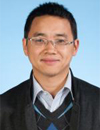
Daoyi Dong
Volunteering activity: – Vice President – Finance (Jan 2025 – Dec 2026)
– Member at Large (Jan 2020 – Dec 2022)
Bio: Dr Daoyi Dong is a Full Professor at the Australian National University and an Adjunct Professor at the School of Engineering and Technology, University of New South Wales, Canberra, and a Fellow of the IEEE, a Future Fellow of the Australian Research Council, a Fellow of Engineers Australia. He received a B.E. degree and a Ph.D. degree from the University of Science and Technology of China in 2001 and 2006, respectively. He had visiting positions at Princeton University, NJ, USA, RIKEN, Wako-Shi, Japan, University of Duisburg-Essen, Germany and The University of Hong Kong, Hong Kong. He is a recipient of a Humboldt Research Fellowship from the Alexander von Humboldt Foundation of Germany, the inaugural ACA Temasek Young Educator Award from the Asian Control Association, an International Collaboration Award, a Discovery International Award and an Australian Postdoctoral Fellowship from Australian Research Council, and K.C. Wong Postdoctoral Fellowship and a President Scholarship from the Chinese Academy of Sciences. He is also a co-recipient of Guan Zhao-Zhi Award at The 34th Chinese Control Conference and the Best Theory Paper Award at The 11th World Congress on Intelligent Control and Automation. |

Email: [email protected] |
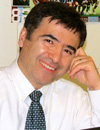
Ying Tang
Volunteering activity: – Vice President – Finance (Jan 2021 – Dec 2024)
– Member at Large (Jan 2019 – Dec 2021)
– Secretary (Jan 2018 – Dec 2019)
– Associate VP – Publications (Jan 2025 – Dec 2025)
Bio: Dr. Ying (Gina) Tang is a Full Professor and the Undergraduate Program Chair of Electrical and Computer Engineering at Rowan University, Glassboro, New Jersey. She received the B.S. and M.S. degrees from the Northeastern University, P. R. China, in 1996 and 1998, respectively, and Ph. D degree from New Jersey Institute of Technology in 2001. Her research interests are in cyber-physical social systems, extended reality, intelligent learning environments, modeling and adaptive control for computer-integrated systems, and sustainable production automation. Her work has been continuously supported by NSF, EPA, US Army, DOT, private foundations, and industry. She has three USA patents, and over 230 peer-reviewed publications, including 77 journal articles, 2 edited books, and 6 book / encyclopedia chapters. Dr. Tang is very active in professional services. She is VP Finance of the IEEE Systems, Man & Cybernetics Society (SMCS). She is the Founding Chair of Technical Committee on Intelligent Solutions to Human-aware Sustainability for IEEE SMCS, and the Founding Chair of Technical Committee on Sustainable Production Automation for IEEE Robotic and Automation Society (RAS). She is the Funding Co-chair of the International Conference on Cyber-physical Social Intelligence. Dr. Tang is presently Associate Editor of IEEE Transactions on Systems, Man, and Cybernetics: Systems, IEEE Transactions on Intelligent Vehicles, IEEE Transactions on Computational Social Systems, and Springer’s Discover Artificial Intelligence. She is the receipt of the meritorious service award from IEEE SMCS, the Best Student Paper award from 2022 International Conference on Cyber-physical Social Intelligence, the Best Paper award from 2020 IEEE International Conference on Networking, Sensing and Control, the Most Active Technical Committee awards from IEEE SMCS (2021) and IEEE RAS (2020), the Best Paper Finalist from 2017 IEEE International Conference on Automation Science and Engineering, National Academy of Engineering Frontier of Engineering Education Fellow, Christian R. and Mary F. Lindback Minority Junior Faculty Award, and Charles A. and Anne Morrow Lindbergh Foundation Award. |
Email: [email protected] |
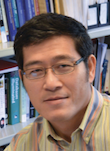
Ferat Sahin
Volunteering activity: – Vice President – Finance (Jan 2015 – Dec 2020)
– Vice President – Human-Machine Systems (Jan 2024 – Dec 2025)
– Member at Large (Jan 2020 – Dec 2023)
– Treasurer (Jan 2011 – Dec 2014)
– Secretary (Jan 2003 – Dec 2006)
Bio: Dr. Ferat Sahin received his M.Sc. and Ph.D. degrees from Virginia Polytechnic Institute and State University. In September 2000, he joined Rochester Institute of Technology, where he is a Professor. His current research interests are System of Systems Simulation and Modeling, Swarm Intelligence, Robotics, MEMS Materials Modeling, MEMS-based Microrobots, Micro Actuators, Distributed Computing, Decision Theory, Pattern Recognition, Distributed Multi-agent Systems, and Structural Bayesian Network Learning. |
Email: [email protected] |
Haibin Zhu
Volunteering activity: – Vice President – Systems Science & Engineering (Jan 2023 – Dec 2026)
– Editor-in-Chief – IEEE Systems, Man, and Cybernetics Magazine (Jan 2022 – Dec 2022)
– Member at Large (Jan 2017 – Dec 2018)
Bio: Dr. Haibin Zhu (M’02–SM’04–F’25) is a Full Professor and the Coordinator of the Computer Science Program, the Founding Director of the Collaborative Systems Laboratory, a member of Arts and Science Executive Committee, Nipissing University, Canada. He is an affiliate full professor of Concordia Univ. and an adjunct professor of Laurentian Univ., Canada. He received a BSc degree in computer engineering from the Institute of Engineering and Technology, China (1983), and MSc (1988) and PhD (1997) degrees in computer science from the National Univ. of Defense Tech. (NUDT), China. He was the chair of the Department of Computer Science and Mathematics, Nipissing University, Canada (2019-2021), a visiting professor and special lecturer in the College of Computing Sciences, New Jersey Institute of Technology, USA (1999-2002) and a lecturer, an associate professor and a full professor at NUDT (1988-2000). He has accomplished (published or in press) over 320 research works including 60 IEEE Transactions articles, six books, five book chapters, four journal issues, and four conference proceedings. He is a Fellow of I2CICC (International Institute of Cognitive Informatics and Cognitive Computing), a senior member of ACM, a full member of Sigma Xi, and a life member of CAST-USA (Chinese Association of Science and Technology, USA). |

Email: [email protected] |
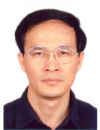
Rodney G Roberts
Volunteering activity: – Vice President – Systems Science & Engineering (Jan 2015 – Dec 2018)
– Secretary (Jan 2015 – Dec 2015)
Bio: Dr. Roberts received B.S. degrees in Electrical Engineering and in Mathematics from the Rose-Hulman Institute of Technology in 1987 and the M.S. and Ph.D. degrees in Electrical Engineering in 1988 and 1992, respectively, from Purdue University. From 1992-1994, he was a National Research Council Fellow at Wright-Patterson Air Force Base in Dayton, Ohio. Since 1994, he has been with the Department of Electrical and Computer Engineering at the Florida A&M University – Florida State University College of Engineering where he is currently a Professor. |
Email: [email protected] |
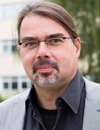
Fei-Yue Wang
Volunteering activity: – Vice President – Human-Machine Systems (Jan 2020 – Dec 2021)
– Editor-in-Chief – IEEE Transactions on Computational Social Systems (Jan 2018 – Dec 2020)
– Member at Large (Jan 2017 – Dec 2019)
Awards: Bio: Fei-Yue Wang received the Ph.D. degree in computer and systems engineering from Rensselaer Polytechnic Institute, Troy, NY, USA, in 1990. He joined The University of Arizona, Tucson, AZ, USA, in 1990, and became a Professor and the Director of the Robotics and Automation Laboratory and the Program in Advanced Research for Complex Systems. In 1999, he founded the Intelligent Control and Systems Engineering Center, Institute of Automation, Chinese Academy of Sciences (CAS), Beijing, China, under the support of the Outstanding Chinese Talents Program from the State Planning Council, and in 2002, was appointed as the Director of the Key Laboratory of Complex Systems and Intelligence Science, CAS. In 2011, he became the State Specially Appointed Expert and the Director of the State Key Laboratory for Management and Control of Complex Systems. His current research focuses on methods and applications for parallel intelligence, social computing, and knowledge automation. |
Email: [email protected] |
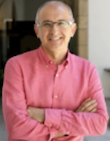
Andreas Nuernberger
Volunteering activity: – Vice President – Human-Machine Systems (Jan 2016 – Dec 2019)
– Vice President – Conferences & Meetings (Jan 2020 – Dec 2021)
Bio: Andreas studied computer science and economics at the Technical University of Braunschweig, Germany, received his Ph.D. in computer science from the Otto von Guericke University of Magdeburg, Germany in 2001 and changed then to UC Berkeley, CA and worked for two years as postdoctoral researcher on adaptive soft computing and visualisation techniques for information retrieval systems. In 2003 he joined the University of Magdeburg as assistant professor for information retrieval and in 2007 he was called to a chair of a tenured professor for ‘Data and Knowledge Engineering’ at the same university. Andreas was visiting researcher at the University of Melbourne, Australia, visiting professor at Université Pierre et Marie Curie, Paris and he is an Emmy Noether Fellow of the German Science Foundation (DFG). In his research, he is currently focusing on the development of interactive systems for information retrieval and organization while exploiting most recent technologies from information retrieval, machine learning, human computer interaction and companion technologies. |
Email: [email protected] |
Enrique Herrera-Viedma
Volunteering activity: – Vice President – Cybernetics (Jan 2022 – Dec 2025)
– Vice President – Publications (Jan 2019 – Dec 2020)
– Member at Large (Jan 2017 – Dec 2019)
Bio: Enrique Herrera-Viedma (Fellow, IEEE) was born in 1966. He received the master’s degree in mathematics, and the Ph.D. degree in mathematics, from the University of Granada, Granada, Spain, 1988 and 1988, respectively.,He is a Full Professor of Computer Science and AI with the University of Granada, Granada, Spain, from 2007, where he is the Vice-President for Research and Knowledge Transfer from June 2015. He has published more than 560 peer-reviewed scientific publications, including 350 papers in JCR journals (More than 200 in Q1, more than 50 in D1). According to Web of Science, his H-index is 85 (more than 23 000 citations received) and according to Google Scholar his H-index is 101 (more than 41 000 citations received). He currently has 50 Highly Cited Papers indexed in Web of Science.,Prof. Herrera-Viedma has been identified as Highly Cited Researcher in both categories, Computer Science and Engineering by Clarivate Analytics, in the years 2014, 2015, 2016, 2017, 2018, 2019, 2020, 2021, 2022, and 2023. He received the UGR Young Researcher Career Award in 2006, the several UGR excellence research paper awards in 2003, 2010, 2019, and 2020, the 2011 IEEE Transactions on Fuzzy Systems Outstanding Paper Award from the IEEE Computational Intelligence Society, the 2016 Andrew P. Sage Best Transactions Paper Award, which recognizes authors of the best paper among all papers published in the IEEE Transactions on Systems, Man, and Cybernetics: Systems, and the 2014-Best Paper Herbert Simon Award of journal International Journal of Information Technology and Decision Making. He has been the Vice-President for Publications in the IEEE System, Man and Cybernetic Society from 2019 to 2020 and currently he is the New VP for Cybernetics till 2025. He is a Fellow of the Institute of Electrical and Electronic Engineers and also of International Fuzzy Systems Association for contributions to fuzzy decision making systems and linguistic modelling in 2021. He is also a member of the prestigious Spanish Think Tank Royal Institute Elcano supported by the large Spanish enterprises and the Spain Government. |
Email: [email protected] |
Shun Feng Su
Volunteering activity: – Vice President – Publications (Jan 2022 – Dec 2023)
– Vice President – Publications (Jan 2025 – Dec 2026)
– Member at Large (Jan 2017 – Dec 2022)
Bio: Shun-Feng Su (Fellow, IEEE) received the B.S. degree in electrical engineering from National Taiwan University, Taiwan, in 1983, and the M.S. and Ph.D. degrees in electrical engineering from Purdue University, West Lafayette, IN, USA, in 1989 and 1991, respectively,.,He is currently a Chair Professor of the Department of Electrical Engineering, National Taiwan University of Science and Technology, Taiwan. He has published more than 300 refereed journal and conference papers in the areas of robotics, intelligent control, fuzzy systems, neural networks, and nonderivative optimization. His current research interests include computational intelligence, machine learning, virtual reality, intelligent transportation systems, smart home, robotics, and intelligent control.,Dr. Su is very active in various international/domestic professional societies. He is currently the IEEE SMC society Distinguished Lecturer Program chair and a member of board of government in the same society. He also serves as a board member of various academic societies. He also acted as a general chair, program chair, and various positions for many international and domestic conferences. He currently serves as an Associate Editor of IEEE Transactions on Cybernetics and Information Science, a Senior Editor and Associate Editor of IEEE Access, the Executive Editor of Journal of the Chinese Institute of Engineers, and an Area Editor and Associate Editor of International Journal of Fuzzy Systems. He is an IFSA fellow, CACS fellow and RST fellow. |
Email: [email protected] |
Peng Shi
Volunteering activity: – Vice President – Publications (Jan 2021 – Dec 2021)
– Editor-in-Chief – IEEE Transactions on Cybernetics (Jan 2022 – Dec 2025)
– Member at Large (Jan 2018 – Dec 2020)
Awards: Bio: Peng SHI (IEEE Fellow) received the Ph.D. degree in Electrical Engineering from the University of Newcastle, Australia in 1994; the Ph.D. degree in Mathematics from the University of South Australia in 1998. He was awarded the Doctor of Science degree from the University of Glamorgan, Wales in 2006; and the Doctor of Engineering degree from the University of Adelaide, Australia in 2015. He is currently a Professor with the University of Adelaide. His research interests include systems and control theory and applications to autonomous and robotic systems, network systems, and cyber-physical systems. He is a Fellow of IET and IEAust, a member of the Academy of Europe, and the International Academy for Systems and Cybernetic Science, and the Distinguished Lecturer of IEEE SMC Society. He is the Editor-in-Chief of IEEE Transactions on Cybernetics and the Senior Editor of IEEE Access. |
Email: [email protected] |
Vladik Y Kreinovich
Volunteering activity: – Vice President – Publications (Jan 2015 – Dec 2018)
– Member at Large (Jan 2019 – Dec 2022)
– Treasurer (Jan 2020 – Dec 2025)
– Secretary (Jan 2024 – Dec 2025)
Bio: Vladik Kreinovich is Professor of Computer Science at the University of Texas at El Paso. His main interests are representation and processing of uncertainty, especially interval computations and intelligent control. He has published 13 books, 44 edited books, and more than 2,000 papers.,Vladik is President-Elect of the International Fuzzy Systems Association (IFSA), Secretary of the IEEE Systems, Man, and Cybernetics Society, Fel-low of International Fuzzy Systems Association (IFSA), Fellow of Mexican Society for Artificial Intelligence (SMIA), Fellow of the Russian Association for Fuzzy Systems and Soft Computing |

Email: [email protected] |
Yo-Ping Huang
Volunteering activity: – Vice President – Conferences & Meetings (Jan 2022 – Dec 2025)
– Member at Large (Jan 2019 – Dec 2021)
Bio: Yo-Ping Huang (Fellow, IEEE) received the Ph.D. degree in electrical engineering from Texas Tech University, Lubbock, TX, USA.,He is currently the President of the National Penghu University of Science and Technology, Penghu, Taiwan. He is also the Chair Professor of the Department of Electrical Engineering, National Taipei University of Technology, Taipei, Taiwan, where he was the Secretary-General. He was a Professor and the Dean of Research and Development, the Dean of the College of Electrical Engineering and Computer Science, and the Department Chair of Tatung University, Taipei. His research interests include deep learning modeling, intelligent control, machine learning, and the AIoT systems design. He is a fellow of IET, CACS, TFSA, and AAIA. He received the FUTEX (Future Tech) Award and the Outstanding Research Award from the National Science and Technology Council, Taiwan. He also serves as the President of the Chinese Automatic Control Society. He serves as the IEEE SMCS VP for Conferences and Meetings and the Chair of the IEEE SMCS Technical Committee on Intelligent Transportation Systems. He was the IEEE SMCS BoG, the Chair of the IEEE SMCS Taipei Chapter and the IEEE CIS Taipei Chapter, and the CEO of the Joint Commission of Technological and Vocational College Admission Committee, Taiwan. |

Email: [email protected] |
Mengchu Zhou
Volunteering activity: – Vice President – Conferences & Meetings (Jan 2018 – Dec 2019)
– Member at Large (Jan 2017 – Dec 2017)
– Secretary (Jan 2016 – Dec 2017)
Awards: Bio: MengChu Zhou (Fellow, IEEE) received the B.S. degree in control engineering from Nanjing University of Science and Technology, Nanjing, China, in 1983, the M.S. degree in automatic control from Beijing Institute of Technology, Beijing, China, in 1986, and the Ph.D. degree in computer and systems engineering from Rensselaer Polytechnic Institute, Troy, NY, in 1990. He joined New Jersey Institute of Technology (NJIT), Newark, NJ, in 1990, and has been a Distinguished Professor of electrical and computer engineering since 2013. His interests are in intelligent automation/transportation, robotics, Petri nets, the Internet of Things, edge/cloud computing, and big data analytics. He has over 1400 publications including 17 books, over 900 journal papers including over 700 IEEE Transactions papers, 31 patents and 32 book-chapters. He is a recipient of Excellence in Research Prize and Medal from NJIT, Humboldt Research Award for US Senior Scientists from Alexander von Humboldt Foundation, and Franklin V. Taylor Memorial Award and the Norbert Wiener Award from IEEE Systems, Man, and Cybernetics Society, and Edison Patent Award from the Research & Development Council of New Jersey. He is a life member of Chinese Association for Science and Technology-USA and served as its President in 1999. He is Fellow of International Federation of Automatic Control (IFAC), American Association for the Advancement of Science (AAAS), Chinese Association of Automation (CAA), and National Academy of Inventors (NAI). |
Email: [email protected] |
Mariagrazia Dotoli
Volunteering activity: – Vice President – Membership & Student Activities (Jan 2023 – Dec 2026)
– Editor-in-Chief – SMC E-Newsletter (Jan 2016 – Dec 2020)
– Member at Large (Jan 2020 – Dec 2022)
Bio: Mariagrazia Dotoli is a Full Professor in Systems and Control Engineering at Politecnico di Bari, Department of Electrical and Information Engineering, which she joined in 1999 as a tenured Assistant Professor. She was the 2011-2013 Vice-Rector for Research of Politecnico di Bari (Italy) and a 2012-2015 member-elect of the Academic Senate of the same University. She is currently Vice Director for Research of the Department of Electrical and Information Engineering at Politecnico di Bari. She received the Laurea degree in Electronic Engineering with honors in 1995 and the Ph.D. in Electrical Engineering in 1999, both from Politecnico di Bari. |

Email: [email protected] |
Karen A Panetta
Volunteering activity: – Vice President – Membership & Student Activities (Jan 2019 – Dec 2022)
– Member at Large (Jan 2017 – Dec 2019)
Bio: Karen received the B.S. degree in computer engineering from Boston University, Boston, MA, USA, and the M.S. and Ph.D. degrees in electrical engineering from Northeastern University, Boston. She is currently the Dean of graduate engineering education and a Professor with the Department of Electrical and Computer Engineering at Tufts University, Medford, MA, USA. She also holds secondary appointments in Computer Science and Mechanical Engineering and a Visiting Faculty appointment in the Tufts School of Dental Medicine. She is the Director of the Panetta Vision and Sensing System Laboratory. |

Email: [email protected] |
Loi Lei Lai
Volunteering activity: – Vice President – Membership & Student Activities (Jan 2013 – Dec 2014)
Bio: Loi Lei Lai (Life Fellow, IEEE) received the B.Sc. (first-class hons.) and Ph.D. degrees in electrical and electronic engineering from the University of Aston, Birmingham, U.K., in 1980 and 1984, respectively, and the D.Sc. degree in electrical and electronic engineering from the City University of London, London, U.K., in 2005.,He is currently the Chair of DRPT International Incorporated, Perth, WA, Australia. He was a Pao Yue Kong Chair Professor with Zhejiang University, Hangzhou, China, a Professor and the Chair of Electrical Engineering with the City University of London, and a University Distinguished Professor with the Guangdong University of Technology, Guangzhou, China. His current research interests include smart cities and smart grids.,Dr. Lai was the recipient of the IEEE Third Millennium Medal, the IEEE Power and Energy Society (IEEE/PES) UKRI Power Chapter Outstanding Engineer Award in 2000, the IEEE/PES Energy Development and Power Generation Committee Prize Paper in 2006 and 2009, the IEEE Systems, Man, and Cybernetics Society Outstanding Contribution Award in 2013 and 2014, the Most Active Technical Committee Award in 2016, and the Best Paper Award in the IEEE International Smart Cities Conference in 2020 to his research team. He is an Associate Editor for IEEE Transactions on Systems, Man, and Cybernetics: Systems, Editor-in-Chief of IEEE Smart Cities Newsletter, a Member of the IEEE Smart Cities Steering Committee, and the Chair of IEEE SMC Society Standards Committee. He was a Member of the IEEE Smart Grid Steering Committee, the Director of Research and Development Center, State Grid Energy Research Institute, China, the Vice President for Membership and Student Activities of IEEE SMC Society, and a Fellow Committee Evaluator and a Distinguished Lecturer of the IEEE Industrial Electronics Society. He is an IET Fellow. |
Email: [email protected] |
Robert Kozma
Volunteering activity: – Editor-in-Chief – IEEE Transactions on Systems, Man, and Cybernetics: Systems (Jan 2020 – Dec 2025)
– Member at Large (Jan 2017 – Dec 2022)
Bio: Robert Kozma (Fellow, IEEE) received the M.Sc. degree in power engineering from Moscow Energy University, Moscow, Russia, in 1982, the M.Sc. degree in mathematics from Eotvos University, Budapest, Hungary, in 1988, and the Ph.D. degree in applied physics from Delft University of Technology, Delft, The Netherlands, in 1992.,He has been a Professor of computer science and mathematics at the University of Memphis, Memphis, TN, USA, since 2000, where he is the Founding Director of the Center for Large-Scale Intelligent Optimization and Networks (CLION), FedEx Institute of Technology, Memphis. He is the President of Kozmos Research Laboratories, Memphis. He has held faculty positions at the University of Massachusetts—Amherst, Amherst, MA, USA; the University of California at Berkeley, Berkeley, CA, USA; Otago University, Dunedin, New Zealand; and Tohoku University, Sendai, Japan. Past visiting positions include NASA Jet Propulsion Laboratory, Robotics; the Lawrence Berkeley Laboratory; the Air Force Research Laboratory, Sensors Directorate; Sarnoff Company, Princeton, NJ, USA, and others. His research focuses on the design, analysis, and control of artificially and biologically intelligent systems, robust decision support systems, autonomous robotics and embodied intelligence, large-scale graphs and networks, including sensor networks, brain and cognitive networks, and brain-computer interfaces, in which areas he authored/edited nine book volumes, over 300 articles, and three patents.,Dr. Kozma was a recipient of the Dennis Gabor Award of INNS. He was the President of the International Neural Network Society (INNS) from 2017 to 2018. He served on the Board of Governors (BOG) of the IEEE Systems, Man, and Cybernetics Society from 2016 to 2018 and in 2020, the AdCom of IEEE Computational Intelligence Society in 2009 and from 2010 to 2012, and the BOG of INNS from 2007 to 2012. He is the Editor-in-Chief of IEEE Transactions on Systems, Man, and Cybernetics: Systems. He has been an associate editor of numerous journals on neural networks, cognition, and cybernetics. |

Email: [email protected] |
David B Kaber
Volunteering activity: – Editor-in-Chief – IEEE Transactions on Human-Machine Systems (Jan 2017 – Dec 2020)
– Member at Large (Jan 2019 – Dec 2021)
Bio: David Kaber is the College of Engineering Dean’s Professor in the School of Mechanical, Industrial, and Manufacturing Engineering. Kaber recently completed a six-year term as chair of the Industrial and Systems Engineering Department at the University of Florida. Prior to joining UF, Kaber was a distinguished professor of ISE at North Carolina State University, where he also served as director of research for the Ergonomics Center of North Carolina. |
Email: [email protected] |
Jun Wang
Volunteering activity: – Editor-in-Chief – IEEE Transactions on Cybernetics (Jan 2017 – Dec 2020)
Awards: Bio: Jun Wang is a Professor in the University of Iowa (UI), with joint appointments in the Department of Chemical and Biochemical Engineering and the Iowa Informatics Initiative, and secondary affiliation with the Center for Global and Regional Environmental Studies, Department of Civil and Environmental Engineering, Department of Physics and Astronomy, and Center for Computer-Aided Design. Prior to joining UIowa in 2016, he worked in University of Nebraska – Lincoln for nine years, first as Assistant Professor and then Associate Professor. His current research focuses on the integration of satellite remote sensing and chemistry transport model to study air quality, wildfires, aerosol-cloud interaction, and land-air interaction. Having worked as a short-term visiting scientist/faculty in NASA GSFC, NOAA STAR, and NCAR, he also enjoys interdisciplinary research and has worked in in areas related to public health, agriculture, climate change, renewable (solar and wind) energy, supercomputing, visualization, data mining, and education in Earth Science. Jun Wang has authored or co-authored 100+ citable works in the peer-reviewed literature. He has been a science team member of several NASA satellite missions. His projects have been funded by NASA, NOAA, DoD, USDA, NSF, state agencies, and private industries. |
Email: [email protected] |
Bin Hu
Volunteering activity: – Editor-in-Chief – IEEE Transactions on Computational Social Systems (Jan 2021 – Dec 2026)
– Member at Large (Jan 2019 – Dec 2021)
Bio: Dr. Bin Hu, Professor, Laureate of the National Recruitment Programme of Global Experts; National Senior Expert; Chief Professor of the National Crucial Fundamental Research Development Programme; Laureate of the Special allowance of the State Council; Member of the Gansu Provincial Chinese People’s Political Consultative Conference; Laureate of Leading Talents in Gansu Province; IET Fellow; Guest Professor of the Department of Computer Science, ETH Zurich; Chair of TC Computational Psychophysiology, IEEE SMC; Vice Director of China Computer Federation Task Force on Big Data; Member of the Ministry of Education Teaching Steering Committee in Computer Science; Review Expert of Computer Science, Ministry of Information Science, National Natural Science Foundation of China; Vice-Chair of International Society of Neuroscience China; ACM China Branch Executive Director; Visiting Fellow of the Center for Excellence in Brain Science and Intelligent Technology, Chinese Academy of Sciences. |

Email: [email protected] |
Xiaojie Su
Volunteering activity: – Editor-in-Chief – IEEE Transactions on Big Data (Jan 2024 – Dec 2025)
– Member at Large (Jan 2024 – Dec 2026)
Bio: Prof. Su received the PhD degree in Control Theory and Control Engineering from Harbin Institute of Technology, China in 2013. He is currently a professor and the associate dean with the College of Automation, Chongqing University, Chongqing, China. He has published 2 research monographs and more than 50 research papers in international referred journals. |
 |
Jie Tang
Volunteering activity: – Editor-in-Chief – IEEE Transactions on Big Data (Jan 2021 – Dec 2023)
Bio: Jie Tang (Fellow, IEEE) is currently a professor with the Department of Computer Science and Technology, Tsinghua University, Beijing, China. His interests include data mining, social networks, and machine learning. He has authored or coauthored more than 200 research papers in top international journals and conferences. He was the associate general chair of KDD 2018, and acting Editor-in-Chief of ACM TKDD. He was honored with NSFC Distinguished Young Scholar, and was the recipient of the 2018 SIGKDD Service Award. |
 |
Andreas Wendemuth
Volunteering activity: – Editor-in-Chief – IEEE Transactions on Affective Computing (Jan 2024 – Dec 2025)
Bio: Andreas studied computer science and economics at the Technical University of Braunschweig, Germany, received his Ph.D. in computer science from the Otto von Guericke University of Magdeburg, Germany in 2001 and changed then to UC Berkeley, CA and worked for two years as postdoctoral researcher on adaptive soft computing and visualisation techniques for information retrieval systems. In 2003 he joined the University of Magdeburg as assistant professor for information retrieval and in 2007 he was called to a chair of a tenured professor for ‘Data and Knowledge Engineering’ at the same university. Andreas was visiting researcher at the University of Melbourne, Australia, visiting professor at Université Pierre et Marie Curie, Paris and he is an Emmy Noether Fellow of the German Science Foundation (DFG). In his research, he is currently focusing on the development of interactive systems for information retrieval and organization while exploiting most recent technologies from information retrieval, machine learning, human computer interaction and companion technologies. |
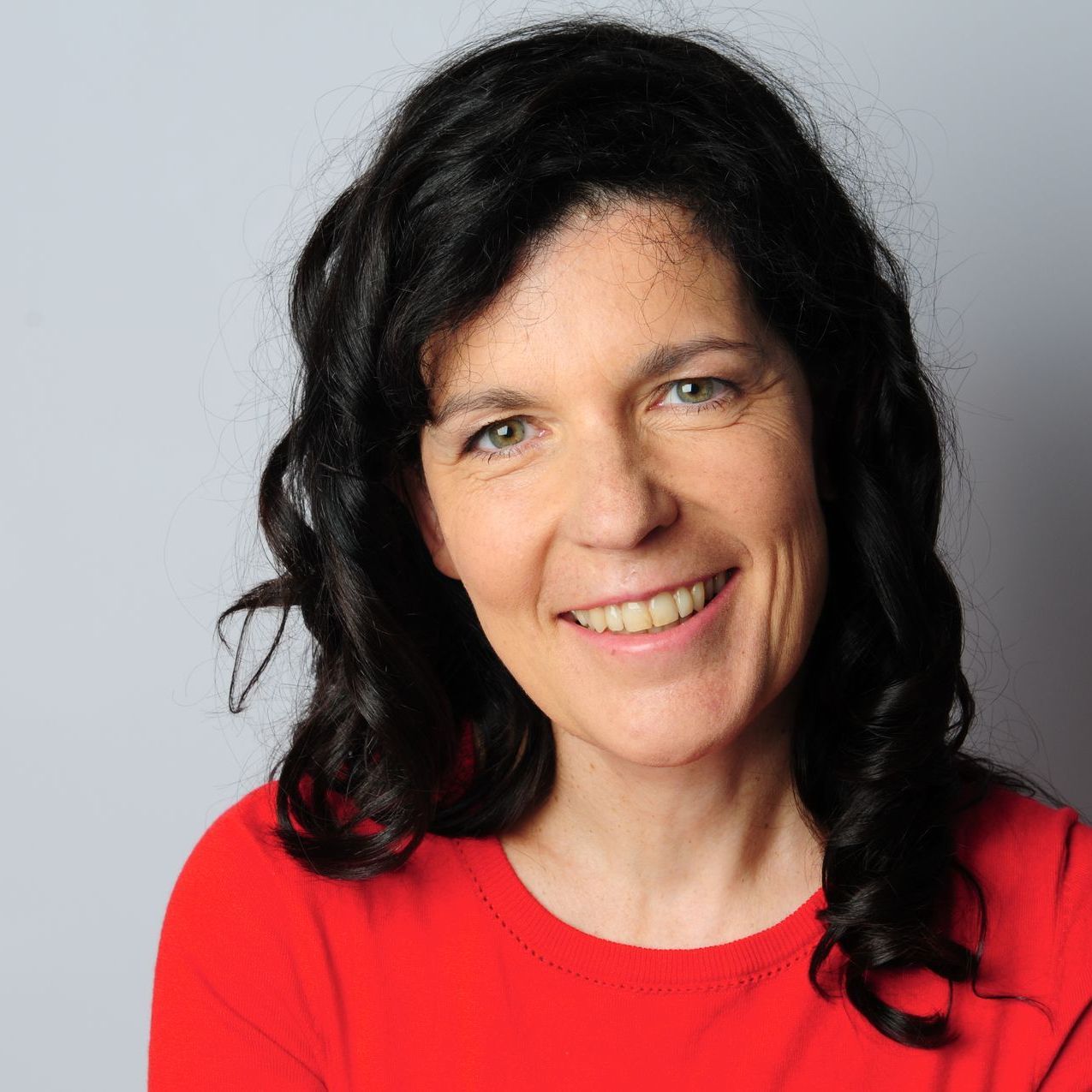 |
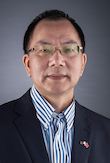
Elisabeth Andre
Volunteering activity: – Editor-in-Chief – IEEE Transactions on Affective Computing (Jan 2021 – Dec 2023)
Bio: Elisabeth André (Senior Member, IEEE) is a full professor of computer science and founding chair of human-centered artificial intelligence with Augsburg University, Germany. She has a long track record in multimodal human-machine interaction, embodied conversational agents, social robotics, affective computing and social signal processing. Her work has won many awards including the Gottfried Wilhelm Leibniz Prize, the most important research funding award in Germany. She is an elected member of the Academy of Europe, the German Academy of Sciences Leopoldina, the National Academy of Science and Engineering (acatech), the Bavarian Academy of Sciences and Humanities (BadW), and the CHI Academy. She is also a fellow of EurAI (European Association for Artificial Intelligence), AAAC (Association for the Advancement of Affective Computing), and ELLIS (European Laboratory for Learning and Intelligent Systems). In addition, she is a Golden Core Awardee of the IEEE Computer Society. In 2019, she was named one of the 10 most influential figures in the history of AI in Germany by National Society for Informatics (GI). From 2019 to 2022, she was serving as the editor-in-chief of IEEE Transactions on Affective Computing. |
Email: [email protected] |
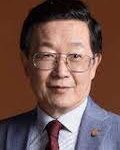
Tingwen Huang
Volunteering activity: – Editor-in-Chief – IEEE Systems, Man, and Cybernetics Magazine (Jan 2023 – Dec 2025)
Bio: Tingwen Huang (Fellow, IEEE) received the B.S. degree in mathematics from Southwest Normal University, Chongqing, China, in 1990, the M.S. degree in applied mathematics from Sichuan University, Chengdu, China, in 1993, and the Ph.D. degree in mathematics from Texas A&M University at College Station, College Station, TX, USA, in 2002.,He was a Professor with Texas A&M University at Qatar, Doha, Qatar, from July 2009 to August 2024. He is currently a Professor with Shenzhen University of Advanced Technology, Shenzhen, China. His research interests include neural networks, complex networks, chaos and dynamics of systems, and their applications. |
Email: [email protected] |
Yingxu Wang, FIEEE
Volunteering activity: – Editor-in-Chief – IEEE Systems, Man, and Cybernetics Letters (Jan 2024 – Dec 2025)
– Member at Large (Jan 2024 – Dec 2026)
Bio: Dr. Yingxu Wang is professor of cognitive systems, brain science, software science, and intelligent mathematics. He is the founding President of International Institute of Cognitive Informatics and Cognitive Computing (I2CICC). He is FIEEE, FBCS, FI2CICC, FAAIA, and FWIF. He has held visiting professor positions at Univ. of Oxford (1995, 2018-2022), Stanford Univ. (2008, 2016), UC Berkeley (2008), MIT (2012), and a distinguished visiting professor at Tsinghua Univ. (2019-2022). He received a PhD in Computer Science from Nottingham Trent University, UK, in 1998 and has been a full professor since 1994. He is the founder and steering committee chair of IEEE Int’l Conference Series on Cognitive Informatics and Cognitive Computing (ICCI*CC) since 2002. He is founding Editor-in-Chiefs and Associate Editors of 10+ Int’l Journals and IEEE Transactions. He is Chair of IEEE SMCS TC-BCS on Brain-inspired Cognitive Systems, and Co-Chair of IEEE CS TC-CLS on Computational Life Science.,His basic research has spanned across contemporary scientific disciplines of intelligence, mathematics, knowledge, robotics, computer, information, brain, cognition, software, data, systems, cybernetics, neurology, and linguistics. He has published 600+ peer reviewed papers and 38+ books/proceedings. He has presented 65+ invited keynote speeches in international conferences. He has served as honorary, general, and program chairs for 40+ international conferences. He has led 10+ international, European, and Canadian research projects as PI. He is recognized by Google Scholar as world top 1 in Software Science, top 1 in Cognitive Robots, top 8 in Autonomous Systems, top 2 in Cognitive Computing, and top 1 in Knowledge Science with an h-index 67. He is recognized by ResearchGate as among the world’s top 1.0% scholars in general and in several contemporary fields encompassing artificial intelligence, autonomous systems, theoretical computer science, engineering mathematics, software engineering, cognitive science, information science, and computational linguistics. He has published formal proofs for two of the world’s top ten hardest mathematical problems known as the Goldbach conjecture and Twin-Prime conjecture in 2022.( |

Email: [email protected] |
Tiago Henrique Falk
Volunteering activity: – Editor-in-Chief – SMC E-Newsletter (Jan 2023 – Dec 2025)
– Member at Large (Jan 2025 – Dec 2027)
Bio: Tiago H. Falk is a full professor at the Institut National de la Recherche Scientifique (INRS), University of Quebec, Montreal, QC H5A 1K6, Canada, and the co-director of the INRS-UQO Joint Research Unit on Cybersecurity. He is a Fellow of IEEE. |
|
Email: [email protected] |
Dongrui Wu
Volunteering activity: – Editor-in-Chief – SMC E-Newsletter (Jan 2021 – Dec 2022)
Bio: Dongrui Wu (Fellow, IEEE) received the BE degree in automatic control from the University of Science and Technology of China, Hefei, China, in 2003, the MEng degree in electrical and computer engineering from the National University of Singapore, in 2006, and the PhD degree in electrical engineering from the University of Southern California, Los Angeles, CA, in 2009. He is now professor and deputy director of the Key Laboratory of the Ministry of Education for Image Processing and Intelligent Control, School of Artificial Intelligence and Automation, Huazhong University of Science and Technology, Wuhan, China. Prof. Wu’s research interests include brain-computer interface, machine learning, computational intelligence, and affective computing. |

Email: [email protected] |
Thomas I. Strasser
Volunteering activity: – General Chair SMC 2025 (Jan 2025 – Dec 2025)
– Member at Large (Jan 2018 – Dec 2020)
Bio: Thomas Strasser (M’09–SM’13) earned his master’s, PhD, and Venia Docendi (habilitation) in automation from Technische Universität Wien (TU Wien). He has been a senior scientist at the AIT Austrian Institute of Technology’s Center for Energy for over 14 years, focusing on smart grid automation, research project development, and mentoring PhD candidates and junior scientists. Before AIT, he spent six years as a senior researcher at PROFACTOR, investigating advanced automation and control systems. He also serves as a docent at TU Wien. |
Email: [email protected] |
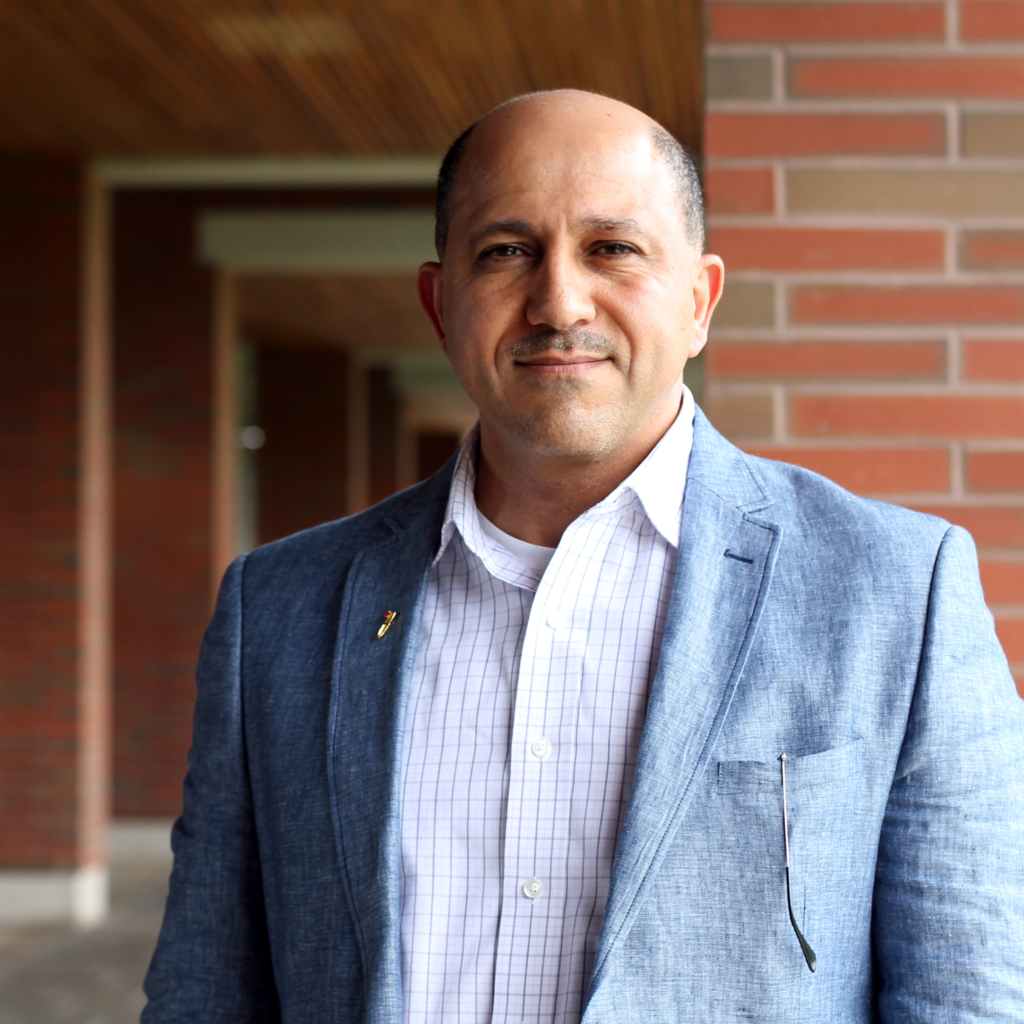
Syed Abdul Rahman Al-Haddad
Volunteering activity: – General Chair SMC 2024 (Jan 2024 – Dec 2024)
Bio: Syed Abdul Rahman Al-Haddad Syed Mohamed, PhD, SMIEEE Associate Professor, Faculty of Engineering Universiti Putra Malaysia He is a PhD graduate in Electrical, Electronic and Systems Engineering from National University Malaysia. His specialized in Human Speech Processing, Animal Sound Processing, Al-Quran Sound Processing, Sound Media Security and Biometric. Dr. Syed has served as a lecturer in Department of Computer and Communications Systems Engineering, Universiti Putra Malaysia since 11 May 2000 before promoted to a Senior Lecturer in 2006 and Associate Professor in year 2012. He had been teaching students in both undergraduate and graduate in Malaysia and International. He managed to get grants from European Union for research attachment, university research grant, ministry of higher education grant and ministry of agriculture grant. Further than that, he has few patents and copyrights. Apart of lecturing and supervising students over 19 years, he actively join professional society such as Malaysia IEEE System, Man and Cybernetics as Deputy Chair and Malaysia National Islamic Calligraphy as Chairman for IT. He had written numerous journals which were mainly published in IEEE. In fact, he actively participate as keynote speaker in seminars and conferences conducted at national and international level. |
Email: [email protected] |
Hossam A.Gabbar
Volunteering activity: – General Chair SMC 2020 (Jan 2020 – Dec 2020)
|

Email: [email protected] |
Maria Pia Fanti
Volunteering activity: – General Chair SMC 2019 (Jan 2019 – Dec 2019)
– Member at Large (Jan 2017 – Dec 2018)
– Member at Large (Jan 2025 – Dec 2027)
Bio: Maria Pia Fanti is full professor of System and Control Engineering at the Department of Electrical and Information Engineering of the Polytechnic of Bari (Italy). |
|
Email: [email protected] |
Yutaka Hata
Volunteering activity: – General Chair SMC 2018 (Jan 2018 – Dec 2018)
|
|
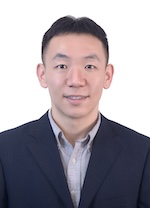
Anup Basu
Volunteering activity: – General Chair SMC 2017 (Jan 2017 – Dec 2017)
|
Email: [email protected] |
Chao Shen
Volunteering activity: – Member at Large (Jan 2025 – Dec 2027)
|
Email: [email protected] |
Ming Hou
Volunteering activity: – Member at Large (Jan 2023 – Dec 2027)
– Associate VP – Human-Machine Systems (Jan 2025 – Dec 2025)
Bio: Dr. Ming Hou is a Senior Defence Scientist and the Principal Authority in Human-Technology Interactions within the Department of National Defence (DND) Canada, an Integrator of the Canadian $1.6B Innovation for Defence Excellence and Security (IDEaS) program, an Adjunct Professor at the University of Toronto, and the Co-Chair of NATO Human Factors Specialist Committee. Dr. Hou is responsible for delivering technological solutions, science-based advice, and evidence-based policy recommendations on AI and Autonomy science, technology and innovation strategies to senior decision makers within DND and the Canadian Armed Forces (CAF) as well as their national and international partner organizations. He was a Scientific Advisor to the Canadian National Centre of Expertise on Human Systems Performance (HSP) and the Canadian National Leader of HSP-Air Joint Panel under The Technical Cooperation Program (TTCP) and directed the Canadian efforts in the TTCP Autonomy Strategic Challenge International Joint Exercise “Autonomous Warriors 2018”. As the Principal Scientist, Dr. Hou led a number of CAF/DND capability development projects including the 1st Canadian Intelligent Tutoring System for Counter Improvised Explosive Device Disposable Operator Training, the 1st Command and Control Centre for the $6B Canadian Remotely Piloted Aircraft System (RPAS) major capital acquisition project, and the 1st Human-AI Symbiosis Technology for Weapon Engagement. His influential book: “Intelligent Adaptive Systems: An Interaction-Centered Design Perspective” (two editions) has guided the development of NATO Standards for RPAS Human Systems Integration Guidance and the United Nations White Paper on “Human-Machine Interfaces in Autonomous Weapon Systems: Consideration for Human Control”. Dr. Hou is the recipient of the prestigious DND Science and Technology Excellence Award in 2020 and the President’s Achievement Award of the Professional Institute of the Public Service of Canada in 2021. Dr. Hou is an adjunct professor at the University of Toronto and a Fellow of the International Institute of Cognitive Informatics and Cognitive Computing. |
Email: [email protected] |
Yan Wan
Volunteering activity: – Member at Large (Jan 2025 – Dec 2027)
– Treasurer (Jul 2022 – Dec 2023)
– Secretary (Jan 2025 – Dec 2025)
Bio: Dr. Yan Wan is currently an Associate Professor in the Electrical Engineering Department at the University of Texas at Arlington. She received her Ph.D. degree in Electrical Engineering from Washington State University in 2009 and then postdoctoral training at the University of California, Santa Barbara. Her research interests lie in the modeling, evaluation and control of large-scale dynamical networks, cyber-physical system, stochastic networks, decentralized control, learning control, networking, uncertainty analysis, algebraic graph theory, and their applications to UAV networking, UAV traffic management, epidemic spread, complex information networks, and air traffic management. She received research grants from the NSF, ONR, NIST, IEEE, and MITRE Corporation as subcontracts from FAA. Her research has led to over 140 publications and successful technology transfer outcomes. She has been recognized by several prestigious awards, including the NSF CAREER Award, RTCA William E. Jackson Award, U.S. Ignite and GENI demonstration awards, IEEE WCNC and ICCA Best Paper Awards, UNT Early Career Award for Research and Creativity, and Tech Titan of the Future – University Level Award. Her research on UAV-carried Wi-Fi system for emergency communication has been reported by many government-agency websites and media outlets, including NSF, NBC, NPR, Huffington Post, and the Washington Times. She is the Associate Editor for the IEEE Transactions on Control of Network Systems and Transactions of the Institute of Measurement and Control, Conference Editorial Board Member of the IEEE Control Systems Society, Vice President for IEEE ComSoc Fort Worth Chapter, and Technical Committee Member of AIAA Intelligent Systems. |
Email: [email protected] |
Jiacun Wang
Volunteering activity: – Member at Large (Jan 2024 – Dec 2026)
Bio: Jiacun Wang received a Ph.D. in computer engineering from Nanjing University of Science and Technology (NJUST), China in 1991. He is currently a Professor in the Computer Science and Software Engineering Department at Monmouth University, West Long Branch, New Jersey. From 2001 to 2004, he was a member of scientific staff with Nortel Networks in Richardson, Texas. Prior to joining Nortel, he was a research associate of the School of Computer Science, Florida International University (FIU) at Miami. |
Email: [email protected] |
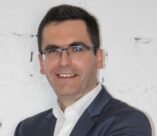
Kevin Wong
Volunteering activity: – Member at Large (Jan 2024 – Dec 2026)
– Secretary (Jan 2022 – Dec 2023)
– Associate Secretary (Jan 2022 – Dec 2022)
Bio: Kevin Wong is currently working as a Professor at Murdoch University in Western Australia. He is the Associate Dean (Research) for the School of Information Technology at Murdoch University. He is the President for the Asia Pacific Neural Network Society (APNNS), and the elected Governing Board member (2024-2026) for the IEEE Systems, Man, and Cybernetics Society. He is a Senior Member of Institute of Electrical and Electronics Engineers (IEEE), a Senior Member of Australia Computer Society (ACS), Certified Professional of ACS, and Senior Member of APNNS. He has a track record of working with many industries and organisations by implementing successful AI and VR solutions. His current research interests include Artificial Intelligence (Artificial Neural Networks (including Deep Learning), Machine Learning, Fuzzy Systems, and Evolutionary Algorithms), Intelligent Data Analysis, , Serious Game and Virtual Reality Technology. He has track records of applying those techniques in areas of Health, Agriculture, Biosecurity, Business, Defence, Education, and Engineering. |
Email: [email protected] |
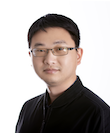
Levente Kovacs
Volunteering activity: – Member at Large (Jan 2024 – Dec 2026)
– Associate VP – Conferences and Meetings (Jan 2025 – Dec 2025)
|
Email: [email protected] |
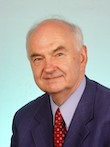
Chenguang Yang
Volunteering activity: – Member at Large (Jan 2023 – Dec 2025)
Bio: Professor Chenguang (Charlie) Yang holds the Chair in Robotics with Department of Computer Science, University of Liverpool, UK. He is leading the Robotics and Autonomous Systems group. He was a Professor of Robotics with University of the West of England, Bristol, leading Robot Teleoperation Group at Bristol Robotics Laboratory. He is a member of European Academy of Sciences and Arts, and holds fellowships of Institute of Electrical and Electronics Engineers (IEEE), Institute of Engineering and Technology (IET), Institution of Mechanical Engineers (IMechE), Aisa-Pacific AI Association (AAIA), and British Computer Society (BCS). He is the corresponding Co-Chair of IEEE Technical Committee on Collaborative Automation for Flexible Manufacturing (CAFM). |
Email: [email protected] |
Janusz Kacprzyk
Volunteering activity: – Member at Large (Jan 2023 – Dec 2025)
Bio: Dr. Irving Engelson, a native of Lithuania, moved to the United States after the Second World War. After briefly serving in the US Army, Engelson took a position with RCA, most notably as a teacher at the RCA Institute. After he completed his education he taught briefly in colleges in New Jersey, before taking up a position as an engineering Dean at the University of Nebraska at Omaha. He later transitioned from academia to several administrative positions at the IEEE including Director for Technical Activities and Managing Director for Corporate Activities. He then went on to become Region One Director of the IEEE and President of the IEEE Engineering Management Society, before he oversaw its transformation into the IEEE Engineering Management Council. In this interview, Engelson describes his long career and close association with the IEEE,, peppering the interview with reviews of his interactions with important personalities in the world of engineering, including Alfred Goldsmith, his mentor while at RCA. Among the many interesting details he contributes through this interview are reflections on the composition and management of governing bodies at the IEEE, including the details of everyday management and the membership of professional societies. He also reflects on the conflicts that emerge from running such a huge body as the IEEE in an increasingly interconnected and globalized world. |

Email: [email protected] |
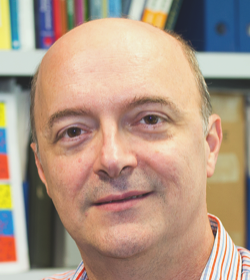
Marta Takacs
Volunteering activity: – Member at Large (Jan 2023 – Dec 2025)
|
Email: [email protected] |
Tom Gedeon
Volunteering activity: – Member at Large (Jan 2023 – Dec 2025)
– Secretary (Jan 2020 – Dec 2020)
– Secretary (Jan 2021 – Dec 2021)
– Secretary (Jan 2022 – Dec 2022)
– Associate Secretary (Jan 2024 – Dec 2024)
– Associate Secretary (Jan 2025 – Dec 2025)
Bio: Tom Gedeon (Senior Member, IEEE) received the BSc and PhD degrees from the University of Western Australia, and Grad Dip Management from UNSW. He is the Human-Centric Advancements Chair in AI with Curtin University. He is an international research professor with Obuda University in Hungary. He is an Honorary professor with the Australian National University, where he was formerly Deputy Dean and Head of Computer Science. He is former president of the Asia-Pacific Neural Network Assembly, and of the Computing Research and Education Association of Australasia. He is a member of the Governing Boards of the Asia-Pacific Neural Network Society and the IEEE Systems Man and Cybernetics Society. His research interests are in responsive AI and responsible AI. |
Email: [email protected] |
Zhijun Li
Volunteering activity: – Member at Large (Jan 2023 – Dec 2025)
Bio: Zhijun Li (Fellow, IEEE) received the Ph.D. degree in mechatronics from Shanghai Jiao Tong University, Shanghai, China, in 2002.,From 2003 to 2006, he was a Post-Doctoral Fellow with The University of Electro Communications, Tokyo, Japan, and the National University of Singapore, Singapore. He is currently the Chair Professor with Tongji University, Shanghai, where he has been the Dean of the School of Mechanical Engineering since 2024. He has authored or co-authored more than 400 articles; his prestigious contributions were wearable robotics and biomechatronics systems. His research interests include wearable robotics, bio-mechatronics systems, and intelligent control.,Dr. Li is a Fellow of AAIA. He was a recipient of the Distinguished Lecturer (RAS), the Web of Science Highly Cited Researcher (2019–2022), the 2018 National Ten-Thousand Talents Program in China, and the 2016 National Distinguished Young Scholar (NSFC). |

Email: [email protected] |
Yaoping Hu
Volunteering activity: – Member at Large (Jan 2022 – Dec 2024)
Bio: Yaoping Hu (M’04) received the Ph.D. degree from the University of Western Ontario, London, ON, Canada, in 2000. Her Ph.D. dissertation was on neurosciences, computer sciences, and robotics.,She is currently a Professor with the Department of Electrical and Computer Engineering, University of Calgary, Calgary, AB, Canada. Her current research interests include the analytics of complex data, cognitive informatics, human–computer interactions within virtual environments, 3-D visualization and haptics, and surgical planning and simulation systems.,Dr. Hu is a member of ACM, and a Professional Engineer (P.Eng.) of the Association of Professional Engineers, Geologists, and Geophysicists of Alberta (APEGA) since 1999. She is an STA Fellow awarded from Japan Science and Technology Corporation. |

Email: [email protected] |
György Eigner
Volunteering activity: – Member at Large (Jan 2017 – Dec 2022)
– Associate Secretary (Jan 2020 – Dec 2021)
Bio: GyÖrgy Eigner (Senior Member, IEEE) received the B.Sc. degree in mechatronic engineering from the Bánki Donát Faculty of Mechanical and Safety Engineering, Obuda University, in 2011, the M.Sc. degree in biomedical engineering from Budapest University of Technology and Economics, in 2013, and the Ph.D. degree from Obuda University, in 2017. He is currently an Associate Professor and the Head of the Biomatics and Applied Artificial Intelligence Institution, John von Neumann Faculty of Informatics, Obuda University. His main research focus is the application of advanced control methods in physiological relations. He has published more than 90 scientific works on these topics and his H-index is nine. He is a member of the Board of Governors of the IEEE System, Man, and Cybernetics Society; the Co-Chair of the Computational Cybernetics Technical Committee; and the Director of the Robotics Special College of Obuda University. |
|
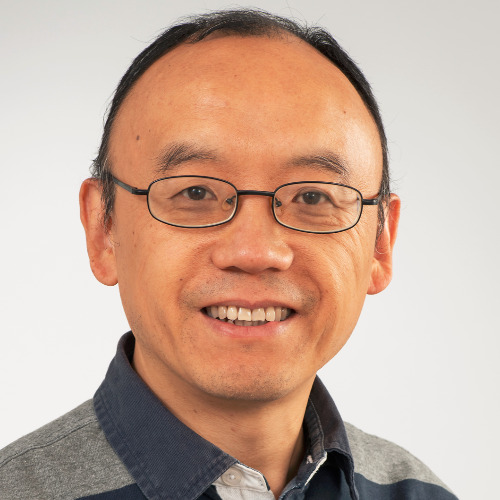
Wai Lok Woo
Volunteering activity: – Member at Large (Jan 2019 – Dec 2021)
Bio: Prof Wai Lok Woo received the BEng and MSc degrees in Electrical and Electronics Engineering, and the PhD degree in Statistics and Machine Learning from the Newcastle University, UK. He is the recipient of the IEE Prize and the British Commonwealth Scholarship. Prof Woo currently holds the Chair in Machine Learning with Northumbria University, UK. He is the Faculty Postgraduate Research Director (Engineering and Environment), and Head of Research Cluster for Artificial Intelligence and Digital Technology. He was previously the Director of Research for Newcastle Research and Innovation Institute, and Director of Operations of Newcastle University. His major research is in the mathematical theory and algorithms for data science and analytics. This includes areas of artificial intelligence, machine learning, data mining, latent component analysis, multidimensional signal and image processing. He has an extensive portfolio of relevant research supported by a variety of funding agencies. He has published over 450 papers on these topics on various journals and international conference proceedings. He serves as Associate Editor to several international signal processing journals including IET Signal Processing, Journal of Acoustics, Journal of Electrical and Computer Engineering. He actively participate in international conferences and workshops, and serves on their organizing and technical committees. He is a Fellow of the Institution Engineering Technology (IET) and Institution of Electrical and Electronic Engineering (IEEE). Prof Woo has delivered more than 20 keynote addresses in Singapore, China, Malaysia, Indonesia, Ireland, Latvia, Portugal, Spain and the United Kingdom. He provides expert evaluation to several funding bodies in the UK, the EU (Horizon2020) and North America. |
 |
Xiao-Zhi Gao
Volunteering activity: – Member at Large (Jan 2019 – Dec 2021)
Bio: Xiao-Zhi Gao received the B.Sc. and M.Sc. degrees in control engineering from the Harbin Institute of Technology, Harbin, China, in 1993 and 1996, respectively, and the D.Sc. (Tech.) degree in electrical engineering from the Helsinki University of Technology, Espoo, Finland, in 1999.,Since January 2004, he has been a Docent at the Helsinki University of Technology. He is also a Guest Professor at Beijing Normal University, Beijing, China, and the Harbin Institute of Technology. He has published more than 100 technical papers in refereed journals and international conferences. His current research interests include neural networks, fuzzy logic, evolutionary computing, and artificial immune systems with their applications in industry. He serves as an Associate Editor of the Journal of Intelligent Automation and Soft Computing. He is also an editorial board member of the Journal of Applied Soft Computing.,Dr. Gao was the General Chair of the 2005 IEEE Mid-Summer Workshop on Soft Computing in Industrial Applications. |
|
Zhen Ji
Volunteering activity: – Member at Large (Jan 2019 – Dec 2021)
|

Email: [email protected] |
David J Mendonca
Volunteering activity: – Member at Large (Jan 2018 – Dec 2020)
– Member at Large (Jan 2022 – Dec 2024)
Bio: David Mendonça (Senior Member, IEEE) received the B.S. degree in English from the University of Massachusetts/Amherst, Amherst, MA, USA, in 1900, the M.S. degree in public policy and managment from Carnegie Mellon University, Pittsburgh, PA, USA, in 1994, and the Ph.D. degree in decision sciences and engineering systems from the Rensselaer Polytechnic Institute, Troy, NY, USA, in 2001.,He is currently a Senior Principal Decision Scientist with MITRE Corporation, Boston, MA, USA. He was a Professor with the Department of Industrial and Systems Engineering and the Department of Cognitive Science, Rensselaer Polytechnic Institute. From 2015 to 2017, he was a Program Director with the National Science Foundation, Alexandria, VA, USA. He was a Visiting Scholar with the University of Lisbon, Lisbon, Portugal, and the Delft University of Technology, Delft, The Netherlands.,Dr. Mendonça is currently a Member of the Board of Governors of the IEEE Systems, Man, and Cybernetics Society and IEEE Boston (Massachusetts) Section. |

Email: [email protected] |
Giancarlo Fortino
Volunteering activity: – Member at Large (Jan 2018 – Dec 2020)
– Associate VP – Cybernetics (Jan 2025 – Dec 2025)
Bio: Giancarlo Fortino (IEEE Fellow 2022) is Full Professor of Computer Engineering at the Dept of Informatics, Modeling, Electronics, and Systems of the University of Calabria (Unical), Italy. |
|
Giuseppe Di Gironimo
Volunteering activity: – Member at Large (Jan 2018 – Dec 2020)
|
 |
Yukio Ohsawa
Volunteering activity: – Member at Large (Jan 2018 – Dec 2020)
Bio: Yukio Ohsawa (Member, IEEE) received the Ph.D. degree in engineering from The University of Tokyo, in 1995.,He was a Professor with The University of Tokyo, in 2009, after positions with Osaka University, University of Tsukuba, and JST. He pioneered Chance Discovery and Data Market Design, publishing 30 edited books including “Living Beyond Data” (Springer), in 2022. He has organized international workshops including IEEE ICDM’s MoDAT series. His research develops human-centered data utilization methodologies implemented across multiple industries and government ministries. He is a member of the Engineering Academy of Japan, in 2021, and the JSAI Director, from 2017 to 2018. He is a fellow of academic societies including AAIA, in 2022 and the Web Intelligence Academy, in 2024. His awards include the MEXT Young Scientists’ Prize, in 2005 and the JSAI Achievement Award, in 2022. He maintains active research in sports analytics while personally excelling in swimming competitions. |
Email: [email protected] |
Ching-Chih Tsai
Volunteering activity: – Member at Large (Jan 2017 – Dec 2019)
– Member at Large (Jan 2022 – Dec 2024)
Bio: Ching-Chih Tsai (Fellow, IEEE) received the Diploma degree from the Department of Electrical Engineering, National Taipei Institute of Technology, Taipei, Taiwan, in 1981, the M.S. degree from the Institute of Control Engineering, National Chiao Tung University, Hsinchu, Taiwan, in 1986, and the Ph.D. degree with the Department of Electrical Engineering, Northwestern University, Evanston, IL, USA, in 1991. He was the Department Chair of the Department of Electrical Engineering, National Chung Hsing University (NCHU), Taichung, from 2012 to 2014. He is currently a Life Distinguished Professor with the Department of Electrical Engineering, NCHU. He has published and co-authored more than 700 technical articles. His current research interests include fuzzy control systems, advanced control methods, and intelligent learning control systems with their applications to commercial and industrial products, mobile robots, and intelligent machinery. Since 2022, he has been a BoG Member and the Associate Vice President of IEEE SMCS. He is a fellow of IET, CACS, RST, and TFSA. From 2012 to 2016, he served as the two-term President for Chinese Automatic Control Society (CACS), Taiwan. From 2016 to 2019, served as the two-term President for the Robotics Society of Taiwan (RST). From 2019 to 2021, he served as the President Elect for IFSA and served as the IFSA President, from 2021 to 2023. |
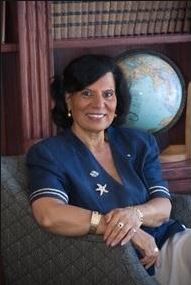 |
Ferial El-Hawary † In memoriamVolunteering activity: – Member at Large (Jan 2019 – Dec 2019)
Bio: Dr. El-Hawary received her B.Eng. from the University of Alexandria, M.Sc. in Electrical Engineering from the University of Alberta, and Ph.D. in Oceans Engineering from Memorial University of Newfoundland. She was President and Co-Founder of BH Engineering Systems Ltd. and was a Professor at the Faculty of Engineering, Dalhousie University, Canada. |

Email: [email protected] |
Keith W Hipel
Volunteering activity: – Member at Large (Jan 2017 – Dec 2018)
Awards: Bio: Keith W. Hipel (Life Fellow, IEEE) received the B.A.Sc. degree in civil engineering, the M.A.Sc. degree in systems design, and the Ph.D. degree in civil engineering from the University of Waterloo, Waterloo, ON, Canada, in 1970, 1972, and 1975, respectively.,He is a Distinguished Professor Emeritus and a Former University Professor of Systems Design Engineering with the University of Waterloo, Waterloo, ON, Canada, where he is the Coordinator of the Conflict Analysis Group. He is the Past President of the Academy of Science, Royal Society of Canada, Ottawa, ON, Canada, a Senior Fellow with the Centre for International Governance Innovation, Waterloo, a Fellow with Balsillie School of International Affairs, Waterloo, and the Past Chair of the Board of Governors, Renison University College, Waterloo. He has authored or coauthored five books, 13 edited books, over 375 journal papers, as well as many conference and encyclopedia articles. He has been privileged to supervise numerous Ph.D. and master’s students who hold responsible positions in industry, academia, and government. His research citations are over 23194, H-index = 71, and i10-index = 371. His current research interests include the development of conflict resolution, multiple criteria decision analysis, time series analysis, and other decision-making methodologies for addressing complex systems of systems engineering problems lying at the interface of science, technology, and the environment with application to water resources management, hydrology, environmental engineering, and energy and sustainable development.,Prof. Hipel is a recipient of the Joseph G. Wohl Outstanding Career Award, the Norbert Wiener Award, the Outstanding Contribution Award, and the Most Active SMC Technical Committee Award from the IEEE Systems, Man and Cybernetics Society, the Japan Society for the Promotion of Science Eminent Scientist Award, the Killam Prize in Engineering from the Canada Council for the Arts, the Docteur Honoris Causa from École Centrale de Lille, the Doctor Honoris Causa from Obuda Universiy, the Honorary Doctorate of Science from Vancouver Island University, the Honorary Member designation and the W. R. Boggess Award from the American Water Resources Association (AWRA), the Honorary Diplomate, Water Resources Engineers from the American Academy of Water Resources Engineers within the American Society of Civil Engineers (ASCE), the Ven Te Chow Award from the Environmental and Water Resources Institute of ASCE, the Sir John William Dawson Medal and Miroslaw Romanowski Medal from RSC, the Distinguished Teacher Award, the Faculty of Engineering Teaching Excellence Award, and the Award of Excellence in Graduate Supervision from the University of Waterloo, the Outstanding Engineering Educator Award from the IEEE Canada, and the Ontario Professional Engineers Engineering Medal for Research and Development. He holds the China Friendship Award, the Jiangsu Friendship Medal, and the Five Honorary Chinese Professorships. He is a Professional Engineer. He was an Associate Editor of 22 international journals over his career, including the IEEE Transactions on Systems, Man and Cybernetics: Systems, Group Decision and Negotiation, and Systems Engineering. He is an Officer of the Order of Canada, a Foreign Member of the National Academy of Engineering of USA, and also the Chinese Academy of Science, and a Fellow of RSC, the Canadian Academy of Engineering, the Engineering Institute of Canada, the American Association for the Advancement of Science, the International Council on Systems Engineering, the ASCE, and the AWRA. |
Email: [email protected] |
Dmitry Goldgof
Volunteering activity: – Member at Large (Jan 2017 – Dec 2017)
Bio: Dmitry B. Goldgof is an educator and scientist working in the area of Medical Image Analysis, Image and Video Processing, Computer Vision, Deep Learning and AI. Dr. Goldgof is currently Distinguished University Professor and Vice Chair in the Bellini College of Artificial Intelligence, Cybersecurity and Computing at the University of South Florida in Tampa. Dr. Goldgof has graduated 36 Ph.D. |
Email: [email protected] |
Plamen P Angelov
Volunteering activity: – Member at Large (Jan 2017 – Dec 2017)
– Member at Large (Jan 2022 – Dec 2024)
Bio: Plamen P. Angelov (Fellow, IEEE) received the MEng degree in 1989, the PhD degree in 1993, and the DSc degree in 2015. He holds a personal chair (full Professorship) in Intelligent Systems with the School of Computing and Communications, Lancaster University, U.K., where he is also the director of LIRA (Lancaster Intelligent, Robotic and Autonomous systems) Research Centre (www.lancs.ac.uk/lira). He is the vice president with the International Neural Networks Society and a distinguished lecturer of IEEE. He was the recipient various awards and is internationally recognized pioneering results into evolving intelligent systems; autonomous, empirical and anthropomorphic machine learning which is focused on human-intelligible results and self-learning. |
|
Email: [email protected] |
Robert P Woon
Volunteering activity: – Treasurer (Jan 2015 – Dec 2019)
|

Email: [email protected] |
Randy Hoover
Volunteering activity: – Secretary (Jan 2015 – Dec 2015)
|
|
Email: [email protected] |
Valeria Garai
Volunteering activity: – Executive Assistant (Jan 2021 – Dec 2025)
|
|
Email: [email protected] |
Chu Kiong Loo
Volunteering activity: – Associate Secretary (Jan 2023 – Dec 2023)
Bio: Prof. Dr. Loo has conducted fascinating research over the 12 years in The University of Malaya, particularly in Lifelong Machine Learning, Explainable Robotics, Explainable AI and recently in Trustworth & Sustainable AI. His numerous publications on the topic have been well-received and have made a substantial contribution to the Continual Machine Intelligence. He has published more than 200 peer-reviewed journal and conference papers on neurorobotics and machine intelligence. In high-impact journals such as IEEE Transactions on Neural Networks and Learning Systems, Neural Networks, Journal of Neural Systems, IEEE Transactions on Cognitive and Developmental Systems, IEEE Transactions on Cybernetics, to name a few. Prof. Loo is also the recipient of JSPS fellowship award from Japan and the Georg Forster Fellowship award from Humboldt Foundation, Germany, Belt and Road Academic Fellowship Scheme, China. He has been the visiting professor of Osaka Metropolitan University, Japan, and King Mongkut’s Institute of Technology Ladkrabang, Thailand and Adjunct Professor in The Harry Butler Institute, Murdoc University. He has applied the developed theory to medical diagnosis, prognosis, and brain-inspired Machine Intelligence, and the potential of his research findings has been successfully demonstrated in various domains, including digital healthcare and cognitive robotics. Chu Kiong has been recognized for his excellence in applied research that has commercial potential based on the 10 patents filed. He is one of the founders of UM spin-off company, UMCH Sdn. Bhd. specializing in AI-enabled connected healthcare solutions. Moreover, he is honoured Malaysia’s Research Star Award 2019 – Research and Innovation Excellence Awards, from the Ministry of Education as one of the most influential researchers in Malaysia. He received the Top Research Scientist Malaysia (TRSM) award 2020 from the Academy of Science Malaysia. |

Email: [email protected] |
Syoji Kobashi
Volunteering activity: – Associate VP – Organization and Planning (Jan 2025 – Dec 2025)
Bio: Syoji Kobashi (S’94–M’98) received the B.Eng. degree in electronics in 1995, the M.E. degree in 1997, and the D.E. degree in 2000, all from Himeji Institute of Technology, Hyogo, Japan.,He is an Associate Professor in Graduate School of Engineering, University of Hyogo, Hyogo, Japan. His research interests include soft computing approaches to medical signal/image processing and human brain functions.,Dr. Kobashi received the Joseph F. Engelberger Best Paper Award at the Second World Automation Congress in 2000 and the IEEE EMBS Japan Young Investigators Competition Award from the IEEE EMBS Japan Chapter in 2003. |

Email: [email protected] |
Zhixin Liu
Volunteering activity: – Associate VP – Finance (Jan 2025 – Dec 2025)
Bio: Zhixin Liu (Senior Member, IEEE) received the Ph.D. degree in information engineering from The Chinese University of Hong Kong, Hong in 2013.,After graduation, he carried out postdoctoral research with the Optoelectronics Research Centre (ORC) University of Southampton, Southampton, U.K. In 2016, he started his lectureship with the Department of Electronics and Electrical Engineering UCL and was appointed Associate Professor in 2021. He has coauthored more than 160 papers in international peer reviewed journals and conferences, including several high profile papers in Nature Electronics, Nature Communication and invited papers in top IEEE/OSA journals. He holds five patents, with two licenced for data centres and optical access systems. He has been PI on more than 14 grants from Industry and Research Councils with funding in excess of 5m. His research focuses on generate, process, and detect signals with high precision. This is achieved by optimally design optical, electronic and optoelectronic systems, using advances in discrete and integrated photonic technologies. He also actively explores the applications high precision signal technologies in communications systems and scientific instruments. He has pioneered frequency comb assisted data conversion, low-latency optically-switched data communications and low-noise optoelectronic RF synthesiser, which has led to several world’s first demonstrations. He is Co-I on the EPSRC Programme grant TRANSNET, Strategical Equipment grant and EU framework grant.,Dr. Liu is a senior member of Optical Society and an EPSRC Open Fellowship. |
Email: [email protected] |
Chun Sing Lai
Volunteering activity: – Associate VP – Systems Science and Engineering (Jan 2021 – Dec 2025)
Bio: Prof Chun Sing Lai received the B.Eng. (First Class Hons.) in Electronic and Electrical Engineering from Brunel University of London, UK, in 2013, and the D.Phil. degree in Engineering Science from the University of Oxford, UK, in 2019. He is currently a Full (Yingcai) Professor with the School of Electrical and Information Engineering at Tianjin University. His interests are in smart grid, energy system modeling, computational intelligence, and electric vehicle systems. He organized the workshop on Smart Grid and Smart City, IEEE SMC 2017 in Canada and a workshop on Blockchain for Smart Grid, IEEE SMC 2018 in Japan. He was a Publications Co-Chair for IEEE International Smart Cities Conference ISC2 (2020 and 2021). Prof Lai was also a Technical Program Co-Chair for 2022 IEEE International Smart Cities Conference. He was Conference Chair for the 2024 5th International Conference on Intelligent Computing and Human-Computer Interaction, technically sponsored by the IEEE. He is a member of the International Advisory Committee of the 4th International Conference on Smart City and Green Energy, Sydney, Australia. He is the Vice-Chair of the IEEE Smart Cities Publications Committee. He is a Senior Editor for IEEE Transactions on Consumer Electronics and an Associate Editor for IEEE Transactions on Systems, Man, and Cybernetics (IEEE/SMCS): Systems and IET Energy Conversion and Economics. He is the Working Group Chair for IEEE P2814 and P3166 Standards. Prof Lai was a recipient of the best paper award in the 2020 IEEE International Smart Cities Conference. He was awarded first place in the Chester W. Sall Memorial Awards by the IEEE Consumer Technology Society in 2025. He was awarded the Best Associate Editor Award for IEEE Transactions on Consumer Electronics, and Excellent Reviewer Award for IET Energy Conversion and Economics in 2024. Prof Lai has co-authored “Smart Energy for Transportation and Health in a Smart City”, IEEE Press/Wiley, 2023. He has contributed to six journal papers that appear on Web of Science as Highly Cited Papers with three as the lead author. Since 2021, he is recognized as the top 2% of world active scientists by survey conducted by Stanford University. He is a Senior Member of the IEEE, UK Chartered Engineer, and Fellow of the Higher Education Academy, UK. |

Email: [email protected] |
Francesco Flammini
Volunteering activity: – Associate VP – Membership and Student Activities (Jan 2025 – Dec 2025)
Bio: Francesco Flammini (Senior Member, IEEE) was born in Formia, Italy, in 1978. He received the master’s degree (cum laude) in computer engineering and the Ph.D. degree in computer and automation engineering from the University of Naples Federico II, Italy, in 2003 and 2006, respectively. From 2003 to 2007, he was a Software V&V Engineer with Ansaldo STS (now Hitachi Rail), where he was a Senior Innovation Engineer, from 2007 to 2016. From 2016 to 2017, he was an Information Security Compliance Manager with Italian State Mint and Polygraphic Institute. Since 2018, he has been an Associate Professor with Linnaeus University, Sweden, where he has chaired the cyber-physical systems (CPS) environment. Since 2020, he has been a Professor of computer science with Mälardalen University, Sweden. He had leadership roles in more than ten research projects. He has edited or authored more than ten books and 130 publications. His research interests include resilient cyber-physical systems and trustworthy autonomy. He is an ACM Distinguished Speaker and the Chair of the IEEE SMC Technical Committee on Homeland Security. |
