


Program-At-A-Glance
| Time | TR-26 | TR-27 | TR-28 | TR-29 | TR-24 |
|---|---|---|---|---|---|
| 8:45 – 9:00 |
Opening Ceremony
ARC Lecture Theatre · All delegates |
||||
| 9:00 – 10:00 |
ARC Lecture Theatre · All delegates |
||||
| 10:00 – 10:15 | Tea break | ||||
| 10:15 – 13:15 |
ISACT Summer School
Organiser-led sessions |
AI Thought Leaders Panel
Open to all · Free entry |
AM session |
AM session |
11:00 – 12:15 |
| 13:15 – 14:00 | Lunch break | ||||
| 14:00 – 17:00 |
ISACT Summer School
Continued |
AI Thought Leaders Panel
Continued |
PM session |
PM session |
PM session |
| 17:00 – 17:15 | Tea break · All delegates | ||||
| Time | TR-27 | TR-28 | TR-29 |
|---|---|---|---|
| 9:00 – 10:00 | Keynote 2 — Prof. Toshio Fukuda ARC Lecture Theatre · All delegates | ||
| 10:00 – 10:15 | Tea break | ||
| 10:15 – 13:15 |
CHAIS Summer School
Collaborative Human-AI Symbiosis |
Session A: Aviation Human Factors & Simplified Vehicle Operation – Special Session & Regular | Session B: Hybrid Intelligence, Human-Machine Cooperation & Autonomous Systems – Special Session & Regular |
| 13:15 – 14:00 | Lunch break | ||
| 14:00 – 16:15 |
CHAIS Summer School
Continued |
Session C: Generative AI, Human-Robot Interaction & Privacy-Preserving Collaboration – Special Session & Regular | Session D: Linguistic Reasoning, AI Education and Responsible AI – Special Session & Regular |
| 16:15 – 16:30 | Tea break · All delegates | ||
| 16:30 – 17:30 | IEEE Distinguished Lecture — Prof. Henry Leung ARC Lecture Theatre · All delegates | ||
| 17:30 – 18:30 | Bus to YWCA at Fort Canning | ||
| 18:30 – 21:30 | Gala Dinner · YWCA Fort Canning | ||
NTU ARC
| Time | TR-26 | TR-27 | TR-28 | TR-29 |
|---|---|---|---|---|
| 9:00 – 10:00 | Keynote 3 — Prof. Chen Chun-Hsien ARC Lecture Theatre · All delegates | |||
| 10:00 – 10:15 | Tea break | |||
| 10:15 – 13:15 | ISACT Summer School Organiser-led sessions | Session E: Physiological Sensing, Workload, BCI & Human-Robot/AI Collaboration – Regular | Session F: Autonomous Systems, Control & Robotics – Regular | Session G: Human Factors, Safety, Healthcare & Speech – Regular |
| 13:15 – 14:00 | Lunch break | |||
| 14:00 – 16:10 | ISACT Summer School Continued | Session H: Human-Machine Intelligence, Autonomous Systems & AI Application – Virtual | Session I: General Human-Machine Systems – Virtual | Closing Ceremony and Farewell |
| 16:15 – 16:30 | Tea break · Farewell | |||
Sessions
Day 2 · TR-28 · AM · Session A: Aviation Human Factors & Simplified Vehicle Operation – Special Session & Regular
| Thursday, 2 July 2026 · 10:15 – 13:15 · TR-28 | |||
| Time | Paper # | Paper Title | Type |
|---|---|---|---|
| Special Session: Aviation & Vehicle Human Factors (61kwa) | |||
| 10:15 – 10:25 | 116 | Adaptive Automation Levels in Air Traffic Control: Balancing Human Workload, Situation Awareness, and Performance | In-person |
| 10:25 – 10:35 | 119 | Adaptive HMI Design Strategies for Mitigating Pilot Spatial Attention-Loss Driven by Scanning Series Monitoring | In-person |
| 10:35 – 10:45 | 52 | Methodological Challenges in Human Factors Research for Air Traffic Management | In-person |
| 10:45 – 10:55 | 84 | Recognising Emotions in Air-Ground Communications with Deep Learning | In-person |
| 10:55 – 11:05 | 104 | The Transparency of Insights into Cockpit Evolution for Future Single-Pilot Operation: Evidence from Eye Tracker Patterns | In-person |
| 11:05 – 11:15 | 114 | Temporal and Spatial Constraints on Peripheral Signal Accessibility During Continuous Task Engagement | In-person |
| 11:15 – 11:25 | 115 | From Misunderstanding to Alignment: LLM-Supported Training to Enhance Controller-Pilot Collaboration | In-person |
| 11:25 – 11:35 | 153 | Evaluating the Impact of a Multi-Sector Planner Configuration on Air Traffic Controller Workload and Support Tool Requirements | In-person |
| Special Session: Simplified Vehicle Operation (3e38s) | |||
| 11:35 – 11:45 | 93 | A Quantum-Like Many-Body Wave Function-Based Modeling Approach for Dynamic Human-Machine Function Allocation | In-person |
| 11:45 – 11:55 | 97 | Implementing Gaze Entropy to Evaluate the Design of an eVTOL with SVO Concept | In-person |
| 11:55 – 12:05 | 86 | An MTE-Based Handling Quality Assessment Framework for SVO Fixed-Wing VTOL Aircraft | In-person |
| 12:05 – 12:15 | 125 | A Fast Computational Approach for Wing Lift Prediction in Tilt-Propeller Slipstream Toward Enhanced SVO Envelope Protection | In-person |
| Contributed Papers: Aviation and Vehicle Human Factors | |||
| 12:15 – 12:25 | 45 | RunA-Fit Adaptive Feature Refinement and Alignment for CLIP-Based Few-Shot Airfield Runway Anomaly Classification | In-person |
| 12:25 – 12:35 | 36 | Evaluating Psychophysiological Variables for Real-Time Activity Recognition in Manned-Unmanned Teaming Missions | In-person |
| 12:35 – 12:45 | 82 | Linking Vehicle Dynamics to User Experience in L2 Automated Urban Turning: A Driving Simulator Study | In-person |
| 12:45 – 12:55 | 71 | A Framework on Human-Autonomy Unified Control and Strategies for EVTOL | In-person |
| 12:55 – 13:15 | Q&A / Buffer | ||
Day 2 · TR-29 · AM · Session B: Hybrid Intelligence, Human-Machine Cooperation & Autonomous Systems – Special Session & Regular
| Thursday, 2 July 2026 · 10:15 – 13:15 · TR-29 | |||
| Time | Paper # | Paper Title | Type |
|---|---|---|---|
| Special Session: Hybrid Intelligence for Airspace Management (5wjur) | |||
| 10:15 – 10:25 | 23 | AI-Enhanced Tactical Congestion Management Framework for Human-in-the-Loop Decision Support | In-person |
| 10:25 – 10:35 | 67 | A Linguistics-Guided Hybrid Intelligence Framework for Conversational Decision Support Toward Smarter Air Traffic Management | In-person |
| 10:35 – 10:45 | 91 | Bridging the Experience Gap: Multimodal Agent-Driven AI for Knowledge Transfer in Air Traffic Management | In-person |
| 10:45 – 10:55 | 121 | System-Level Performance Analysis of AI-Assisted and Conventional Coordination in Air Traffic Management | In-person |
| 10:55 – 11:05 | 123 | Evaluation of GenLLM-Based Air Traffic Complexity Assessment | In-person |
| 11:05 – 11:15 | 138 | Retrieval-Augmented Large Language Models for Evidence-Based Hazard Log Generation in Emerging Aviation Systems | In-person |
| 11:15 – 11:25 | 139 | Human-AI Collaboration for UAS Traffic Management: A Review of Decision Support, Trust, and Assurance | In-person |
| 11:25 – 11:35 | 140 | A Hybrid Learning Control Framework for Safety-Constrained Multi-Agent Aerial Pursuit in Airport Airspace | In-person |
| 11:35 – 11:45 | 64 | A Physiological Feature-Based Machine Learning Approach for Identification of Multiple Visual Monitoring Tasks | In-person |
| Special Session: Human-Machine Cooperative Intelligence and Autonomous Driving (6a4h1) | |||
| 11:45 – 11:55 | 79 | Safe Driving for Human-Machine Shared Control: A Prediction-Informed Risk-Aware SMPC | In-person |
| 11:55 – 12:05 | 126 | LIT-Bench: A Multi-Level Evaluation Benchmark for Vision-Language Models in Intelligent Transportation Systems | In-person |
| Contributed Papers: Autonomous Systems and Multi-Agent Control | |||
| 12:05 – 12:15 | 168 | City-Wide Low-Altitude Urban Air Mobility: A Scalable Global Path Planning Approach Via Risk-Aware Multi-Scale Cell Decomposition | In-person |
| 12:15 – 12:25 | 142 | Beyond Transportation: Autonomous Vehicles As a Human-City Interface for Future Mobility (presented by Keqi) | In-person |
| 12:25 – 12:35 | 48 | Distributed Swarm Deployment in Fourier Coordinates Via Riesz Energy Shaping | In-person |
| 12:35 – 12:45 | 49 | CBF-QP Based Collision-Constrained Shared Control for Multi Agent Robot Swarms | In-person |
| 12:45 – 12:55 | 25 | ART: Adaptive Relational Transformer for Pedestrian Trajectory Prediction with Temporal-Aware Relations | In-person |
| 12:55 – 13:05 | Q&A / Buffer | ||
| 13:05 – 13:15 | Q&A / Buffer | ||
Day 2 · TR-28 · PM · Session C: Generative AI, Human-Robot Interaction & Privacy-Preserving Collaboration – Special Session & Regular
| Thursday, 2 July 2026 · 14:00 – 16:15 · TR-28 | |||
| Time | Paper # | Paper Title | Type |
|---|---|---|---|
| Special Session: Generative AI, Human-Robot Interaction and Digital Twins (5mbyy) | |||
| 14:00 – 14:10 | 164 | Speech Emotion Recognition with Dual-Stream Channel Attention | In-person |
| 14:10 – 14:20 | 170 | Geo-NWM: A Theoretical Framework for Geometry-Consistent World Models in 6-DoF Humanoid Navigation | In-person |
| 14:20 – 14:30 | 172 | Toward a Humanoid Conductor: Beat-Pattern Gesture Synthesis and Evaluation on the Unitree | In-person |
| 14:30 – 14:40 | 120 | Automated Diagnostic Evaluation of Vision-Guided Waste Sorting Via LLMs | In-person |
| Special Session: Privacy-Preserving and Trustworthy Human-Agent Collaboration (ndkq7) | |||
| 14:40 – 14:50 | 152 | Contactless Palmprint Identification with Programmable Multispectral Imaging and Foundation Models on the Edge | In-person |
| 14:50 – 15:00 | 145 | Efficient and Interpretable Tabular Learning Via Visual Transformation | In-person |
| 15:00 – 15:10 | 122 | Governance-Aligned Chatbot Operationalizing the Fourth Edition of the Occupational Therapy Practice Framework (OTPF-4) | In-person |
| Contributed Papers: Human-Robot Interaction and Control | |||
| 15:10 – 15:20 | 32 | Adaptive Energy-Based Robot Control for Physical Human-Robot Interaction: A Less Conservative Approach | In-person |
| 15:20 – 15:30 | 39 | Delay-Compensated Stiffness Estimation for Robot-Mediated Dyadic Interaction | In-person |
| 15:30 – 15:40 | 53 | Adaptive Observer-Based Control for Reduced-Sensor Dual-Parallel PMSMs with Stator Resistance Variation | In-person |
| 15:40 – 16:15 | Q&A / Buffer | ||
Day 2 · TR-29 · PM · Session D: Linguistic Reasoning, AI Education and Responsible AI – Special Session & Regular
| Thursday, 2 July 2026 · 14:00 – 16:15 · TR-29 | |||
| Time | Paper # | Paper Title | Type |
|---|---|---|---|
| Special Session: Human-AI Systems for Linguistic Reasoning and AI Education (vv157) | |||
| 14:00 – 14:10 | 69 | AI-Supported Linguistic Reasoning: A Human-AI Decision Support Framework for Multilingual Meaning and Ambiguity | In-person |
| 14:10 – 14:20 | 107 | Joyful Learning with Digital Escape Rooms: A Human-Centered Framework for Teacher Education and AI-Enabled Extension | In-person |
| 14:20 – 14:30 | 108 | AI Powered Interactive Role Play Simulator for Authentic Spoken Language Practice | In-person |
| 14:30 – 14:40 | 109 | Discriminant Insights: Applying Linear Discriminant Analysis to Tamil Vowel Usage for Social Awareness and Emotional Lyrics in Education | In-person |
| 14:40 – 14:50 | 110 | Statistical Modeling of Tamil Vowel Usage for Human-AI Collaborative Language Education: A Comparative Study of LDA and Regularized Logistic Regression | In-person |
| 14:50 – 15:00 | 111 | Quantitative Analysis of Vallinam and Idaiyinam Patterns in Sangam-Era Tamil Texts for Interpretable Language Analytics | In-person |
| 15:00 – 15:10 | 68 | Action-Conditioned Prompting for Air Traffic Control: A Smart Prompt Producer That Converts Controller HMI Actions into Verified, Explainable LLM Outputs | In-person |
| Contributed Papers: Trust, Responsible AI and Community Systems | |||
| 15:10 – 15:20 | 41 | FSC-CD: A Feature-Structure Coupled Approach for Community Deception in Networks | In-person |
| 15:20 – 15:30 | 77 | Closing the Context Gap: Community Rules as a Correction Layer for Algorithmic Moderation | In-person |
| 15:30 – 15:40 | 112 | Towards Responsible AI in Safety-Critical Human-Machine Systems: A Literature-Based Governance Framework (Elias Panner) | In-person |
| 15:40 – 15:50 | 129 | Integrating Responsible AI into the Model Development Life Cycle: A Practical Framework for Predictive Maintenance | In-person |
| 15:50 – 16:00 | 137 | A Task-Based Benchmark for Model Context Protocol-Driven Geospatial Dataset Discovery: LLM Agents vs Human Search | In-person |
| 16:00 – 16:15 | Q&A / Buffer | ||
Day 3 · TR-27 · AM · Session E: Physiological Sensing, Workload, BCI & Human-Robot/AI Collaboration – Regular
| Friday, 3 July 2026 · 10:15 – 13:15 · TR-27 | |||
| Time | Paper # | Paper Title | Type |
|---|---|---|---|
| Session E: Physiological Sensing, Workload, BCI & Human-Robot/AI Collaboration – Regular Papers | |||
| 10:15 – 10:25 | 21 | Quantifying Biological Sex Leakage in Electroencephalography-Based Mental Workload Measurement and Its Impact on Model Performance | In-person |
| 10:25 – 10:35 | 61 | Continuous Neurophysiological Modeling of Flow Dynamics across Machine-Mediated Task Contexts | In-person |
| 10:35 – 10:45 | 62 | A Multimodal Continuous Emotional Workload Index for Quantifying Stress-Recovery Dynamics | In-person |
| 10:45 – 10:55 | 85 | MSTformer: A Multi-Scale Spatial-Temporal Transformer for Interpretable Mental Workload Monitoring in Simplified Vehicle Operations | In-person |
| 10:55 – 11:05 | 47 | Consumer Trait Prediction from EEG Using a Novel SpectralTraitNet for Neuromarketing Application | In-person |
| 11:05 – 11:15 | 57 | A TCN-Based Framework for Physiological EOG Artifact Removal in Motor Imagery EEG Signals | In-person |
| 11:15 – 11:25 | 90 | Temporal Uncertainty and Reliability of EMG-Based Machine Learning During Dynamic Contractions | In-person |
| 11:25 – 11:35 | 42 | Human Activity Recognition Using 5G Channel State Information with Deep Learning | In-person |
| 11:35 – 11:45 | 46 | Physical Human-Robot Interaction: A Review from the Guide Robot Perspective | In-person |
| 11:45 – 11:55 | 59 | Spatial Context-Aware VLM-Assisted Goal Reasoning for Navigation in Guide Service Robots | In-person |
| 11:55 – 12:05 | 28 | Human-In-The-Loop Rebar Inspection: Integrating Vision Foundation Model with Mixed Reality for Construction Quality Assurance | In-person |
| 12:05 – 12:15 | 99 | Quantifying Mentor Resilience in the Digital Companion Program: Human Factors Analysis Via Teaching Log Text Mining | In-person |
| 12:15 – 13:15 | Q&A / Buffer | ||
Day 3 · TR-28 · AM · Session F: Autonomous Systems, Control & Robotics – Regular
| Friday, 3 July 2026 · 10:15 – 13:15 · TR-28 | |||
| Time | Paper # | Paper Title | Type |
|---|---|---|---|
| Session F: Autonomous Systems, Control & Robotics – Regular Papers | |||
| 10:15 – 10:25 | 18 | A Scenario-Based Warehouse Management Model for Engineering Machinery Maintenance Operations | In-person |
| 10:25 – 10:35 | 72 | Clustering-Based Learning for UAV Tracking and Position Estimation | In-person |
| 10:35 – 10:45 | 74 | Learning-Based Crash Area Prediction for Hexarotors Using Kolmogorov-Arnold Networks | In-person |
| 10:45 – 10:55 | 49 | CED-TRL: Curriculum Environment Design for Temporally Extended Reinforcement Learning Tasks | In-person |
| 10:55 – 11:05 | 176 | Event-Triggered Adaptive Robust Control for Uncertain Nonlinear Networked Systems under DoS Attacks | In-person |
| 11:05 – 11:15 | 177 | Temporal Query Persistence for Online Open-Vocabulary 3D Instance Segmentation Via Tracking-By-Detection | In-person |
| 11:15 – 11:25 | 179 | Research on the Design and Motion Control of an Underwater Retractable Manipulator | In-person |
| 11:25 – 11:35 | 180 | Pareto-Optimised Sugeno-Adaptive Control for Actuator-Level Trajectory Tracking of Quadrupeds on Complex Terrain | In-person |
| 11:35 – 11:45 | 166 | From Scarcity to Coverage: Generative Behavioral Modeling for Child Identification on Smartphones | In-person |
| 11:45 – 11:55 | 10 | Human-AI Collaborative Learning: Human-In-The-Loop Knowledge Infusion via Topological Neural Representations | In-person |
| 11:55 – 12:05 | 101 | An AR-HUD and VLM Assisted Interactive Driving: From Lightweight Intent Recognition to Real-Time Visual Grounding | In-person |
| 12:05 – 13:15 | Q&A / Buffer | ||
Day 3 · TR-29 · AM · Session G: Human Factors, Safety, Healthcare & Speech – Regular Papers
| Friday, 3 July 2026 · 10:15 – 13:15 · TR-29 | |||
| Time | Paper # | Paper Title | Type |
|---|---|---|---|
| Session G: Human Factors, Safety, Healthcare & Speech – Regular Papers | |||
| 10:15 – 10:25 | 44 | Effects of Display Size on Depth Perception During UAV Simulation Flight | In-person |
| 10:25 – 10:35 | 56 | PPG-Based Assembly Quality Detection for Human-Centric Manufacturing: An Empirical Study of Cross-Participant Generalization | In-person |
| 10:35 – 10:45 | 58 | Robust Preprocessing for RMSSD-Based Heart Rate Variability in Wearable ECG Data | In-person |
| 10:45 – 10:55 | 155 | CLARITY: Contextual Linguistic Adaptation and Accent Retrieval for Dual-Bias Mitigation in Text-To-Speech Generation | In-person |
| 10:55 – 11:05 | 159 | Human Error Analysis of Excavator-Related Accidents Using Rasmussen’s Skill-Rule-Knowledge Framework: A Retrospective Study | In-person |
| 11:05 – 11:15 | 162 | Exploring Rider Information Processing for E-Scooter Safety: A Pilot Questionnaire Study | In-person |
| 11:15 – 11:25 | 167 | Accident Types, Contributing Factors, and Risk Controls for Electric Scooter in South Korea: A Systematic Literature Review | In-person |
| 11:25 – 11:35 | 50 | Fake Reviews Detection: Evaluation of Machine Learning Methods for Text Classification in Tourism Context | In-person |
| 11:35 – 13:15 | Q&A / Buffer | ||
Day 3 · TR-27 · PM · Session H: Human-Machine Intelligence, Autonomous Systems & AI Application – Virtual
| Friday, 3 July 2026 · 14:00 – 16:25 · TR-27 | |||
| Time | Paper # | Paper Title | Type |
|---|---|---|---|
| Session H: Human-Machine Intelligence, Autonomous Systems & AI Application – Virtual | |||
| 14:00 – 14:10 | 173 | What Self-Driving Companies Should Learn from Drone Remote Operations | Virtual |
| 14:10 – 14:20 | 160 | Risk-Adaptive Pareto Coordination for Electric Articulated Vehicles | Virtual |
| 14:20 – 14:30 | 174 | Vision-Action Coordination During Lane Changes: Temporal Analyzing Gaze and Steering Dynamics in Real-World Driving | Virtual |
| Virtual Special Session: Simplified Vehicle Operation (3e38s) | |||
| 14:30 – 14:40 | 98 | A Unified PHM Operation Interface for Cross-Domain Transportation Systems: A Human-Autonomy Teaming and Safety Assurance Framework Based on OSA-CBM and AIOps | Virtual |
| 14:40 – 14:50 | 89 | Attention-Based Deep Reinforcement Learning for eVTOL Visual Landing Assistance in Unstructured Environments | Virtual |
| Virtual Special Session: Human-AI Systems for Linguistic Reasoning and AI Education (vv157) | |||
| 14:50 – 15:00 | 150 | Presupposition-Sensitive Analysis of LLM Assisted Tamil Literary Translation for Translation Education | Virtual |
| Virtual Special Session: Generative AI, Human-Robot Interaction and Digital Twins (5mbyy) | |||
| 15:00 – 15:10 | 118 | Multimodal Voice Distress Detection for Real-Time Safety Monitoring in Schools | Virtual |
| Virtual Contributed Papers: General Human-Machine Systems | |||
| 15:10 – 15:20 | 161 | Robust Building Damage Detection in Cross-Disaster Settings Using Domain Adaptation | Virtual |
| 15:20 – 15:30 | 171 | Multi-Disease Detection and Severity Grading in Guava Leaves Using Deep Learning: A Real-Time Framework for Precision Agriculture | Virtual |
| 15:30 – 15:40 | 78 | When Human-In-The-Loop Fails: Accountability Across AI Adoption Levels in Human-Machine Systems | Virtual |
| 15:40 – 15:50 | 88 | Cognitive Imprinting: Stabilizing Interaction in Human-AI Cybernetic Systems | Virtual |
| 15:50 – 16:00 | 35 | MMFCyberDetector: A Multimodal Skeleton-Based Framework for Cyberbullying Action Detection | Virtual |
| 16:00 – 16:10 | 19 | Impact of Measurement Duration on the Identification of Touchscreen Biodynamic Feedthrough Models | Virtual |
| 16:10 – 16:20 | 49 | CBF-QP Based Collision-Constrained Shared Control for Multi Agent Robot Swarms | Virtual |
| 16:20 – 16:25 | Open Q&A with virtual presenters | ||
Day 3 · TR-28 · PM · Session I: General Human-Machine Systems – Virtual
| Friday, 3 July 2026 · 14:00 – 16:25 · TR-28 | |||
| Time | Paper # | Paper Title | Type |
|---|---|---|---|
| Session I: General Human-Machine Systems – Virtual | |||
| 14:00 – 14:10 | 14 | Event-Triggered Prescribed-Time Synchronization for Multi-Agent Quadcopters Using Polynomial Error | Virtual |
| 14:10 – 14:20 | 54 | SAGE: Student-Focused Adaptive Guidance Engine for Intelligent Tutoring with Regulated Learning | Virtual |
| 14:20 – 14:30 | 55 | ALTR: Adaptive Defense Framework against Adversarial LLM Threats in Critical Domain Applications | Virtual |
| 14:30 – 14:40 | 63 | MTTFormer: A Multi-Branch Integrated Network with Temporal Convolutional Transformers for Motor Imagery Brain-Computer Interfaces | Virtual |
| 14:40 – 14:50 | 66 | Pharmacological Non-Stationarity in Human-AI Systems: A Framework for Medication-Aware Adaptive Decision Support | Virtual |
| 14:50 – 15:00 | 70 | CAPTAIMN: A Real-Time LLM and RAG Based Decision Support System for Navigational Safety and COLREGs Compliance | Virtual |
| 15:00 – 15:10 | 94 | Cognitive Training Using a Brain-Computer Interface for θ/β Ratio Self-Regulation – Preliminary Results with Long COVID-19 Survivors | Virtual |
| 15:10 – 15:20 | 117 | On Selecting Chatbots Utilized by Small and Medium-Sized Enterprises: Evaluation of a New Taxonomy-Based Selection Metric for Generative AI Based on a Think-Aloud Study with Decision-Makers | Virtual |
| 15:20 – 15:30 | 136 | Hand Pose Estimation of Point Cloud Dyadic Human-Object-Human Seated Handover Tasks | Virtual |
| 15:30 – 15:40 | 157 | Language Model-Based Monitoring of Cynicism and Discourse Convergence in Student Opinion Articles (2010-2024) | Virtual |
| 15:40 – 15:50 | 175 | Second-Order Sliding Mode Control with Prescribed Performance Guarantees for Nonlinear Systems | Virtual |
| 15:50 – 16:00 | 154 | Embodiment Matters in LLM-Driven Interactive Storytelling: Comparing a Physical Robot and a Virtual Agent | Virtual |
| 16:00 – 16:10 | 151 | Vision-Conditioned Structured Trajectory Planning via Flow Matching | Virtual |
| 16:10 – 16:20 | 128 | CONSALE: A Goal-Driven Framework for Situation-Aware Adaptive Microlearning | Virtual |
| 16:20 – 16:25 | Open Q&A with virtual presenters | ||
Keynote
Keynote 1
Prof. Ljiljana Trajković
Data Mining and Machine Learning for Analysis of Network Traffic

Collection and analysis of data from deployed networks is essential for understanding communication networks. Hence, data mining and statistical analysis of network data have been employed to determine traffic loads, analyze patterns of users’ behavior, predict future network traffic, and detect traffic anomalies. The Internet has historically been prone to failures and attacks that significantly degrade its performance, affect the Internet connectivity, and cause routing disconnections. Frequent cases of various cyber threats have been encountered over the years and, hence, detection of anomalous behavior is a topic of great interest in cybersecurity. In described case studies, traffic traces collected by various collection sites are used to classify network anomalies. Various anomaly and intrusion detection approaches based on machine learning have been employed to analyze collected data. Deep learning, broad learning, gradient boosted decision trees, and reservoir computing algorithms were used to develop models based on collected datasets that contain Internet worms, viruses, power outages, ransomware events, router misconfigurations, Internet Protocol hijacks, and infrastructure failures in times of conflict. The reported results indicate that while performance of machine learning models greatly depends on the used datasets, they are viable tools for detecting the Internet anomalies.
Ljiljana Trajkovic received the Dipl. Ing. degree from University of Pristina, Yugoslavia, the M.Sc. degrees in electrical engineering and computer engineering from Syracuse University, Syracuse, NY, and the Ph.D. degree in electrical engineering from University of California at Los Angeles. She is currently a professor in the School of Engineering Science, Simon Fraser University, Burnaby, British Columbia, Canada. Her research interests include communication networks and dynamical systems. Dr. Trajkovic served as IEEE Division X Delegate/Director, President of the IEEE Systems, Man, and Cybernetics Society, and President of the IEEE Circuits and Systems Society. She serves as Editor-in-Chief of the IEEE Transactions on Human-Machine Systems and is a Fellow of the IEEE.
Keynote 2
Prof. Toshio Fukuda
AI Robots and Future Direction: Embodied Intelligence and Robot
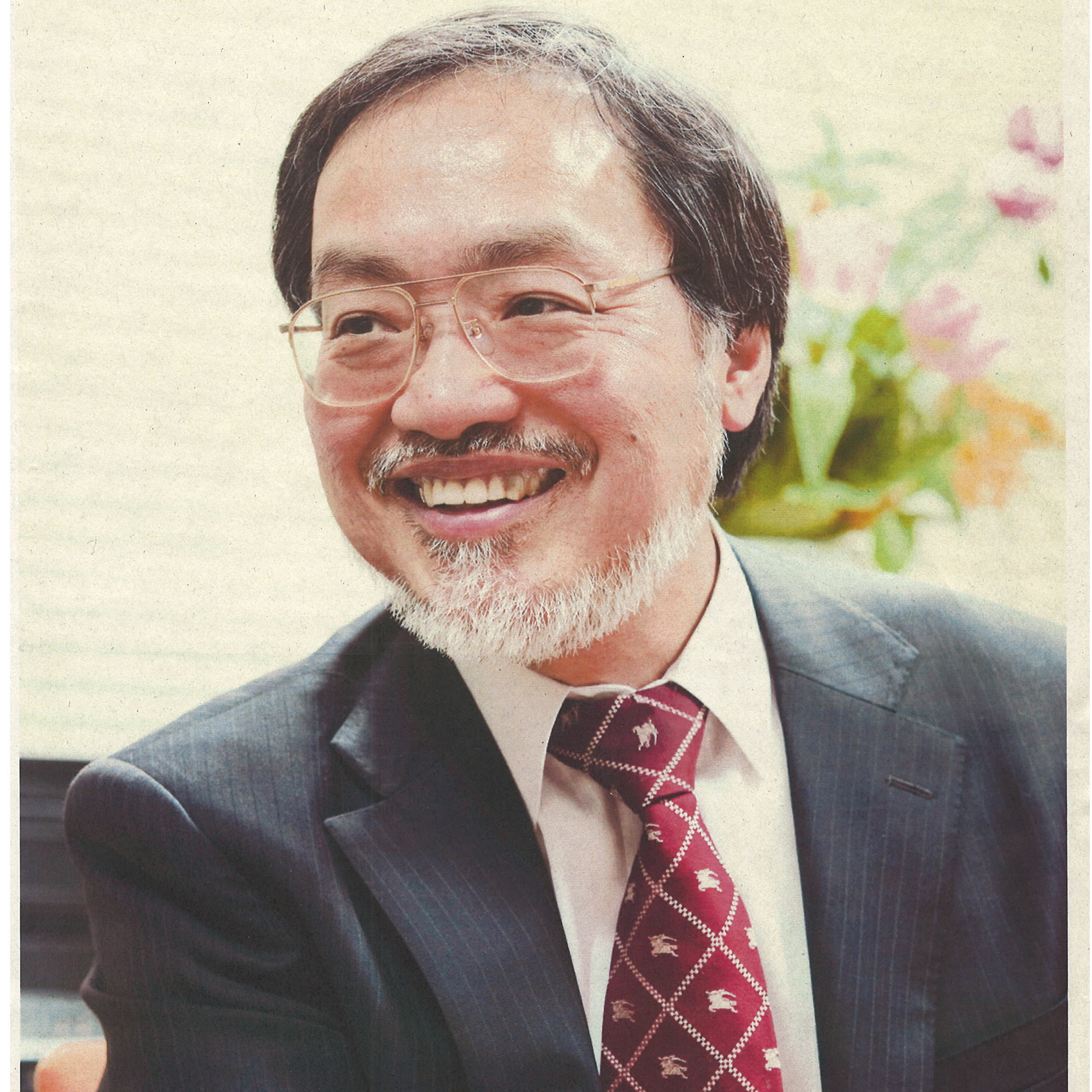
There are many ways to make research and development of physical AI robotic systems. I focus on “Embodied Intelligence and Robot” here based on the coevolution and self organization capabilities aiming on solving the Mega-Trend problems. There are new and challenging programs and projects aiming at the AI robotic system in future. I will introduce some of the research projects for realization of the future robot in various fields by back-casting technologies from the 2050 to the current ones. It is important to have new ideas for the physical AI robots rather than not only applications of conventional AI.
Toshio Fukuda received Dr. Eng. from the University of Tokyo, Tokyo, Japan, in 1977. Currently, he is Professor Emeritus at Nagoya University, Professor at Waseda University and Vice President of E-JUST. His major is bio-robotics, especially Micro and Nano Robotics. Dr. Fukuda served as IEEE President and CEO (2020), IEEE Director of Division X, Systems and Control (2017–2018), IEEE Region 10 Director (2013–2014), and President of IEEE Robotics and Automation Society (1998–1999). He was Founding President of IEEE Nanotechnology Council (2002–2003, 2005). Awards include IEEE Robotics and Automation Pioneer Award (2004), IEEE Robotics and Automation Technical Field Award (2010), Medal of Honor on Purple Ribbon (2015), and The Order of the Sacred Treasure, Gold Rays with Neck Ribbon (2022). He is an IEEE Fellow (1995) and Member of the Japan Academy of Engineering (2013).
Keynote 3
Prof. Chen Chun-Hsien
AI-aided Human Factors in Intelligent Traffic Management Systems

The formal field of human factors was originated during World War II, while artificial intelligence (AI) was invented as a field of study in the mid-1950s. Nevertheless, interactions between these two fields of research used to be limited conventionally. However, AI technologies have been increasingly applied to support various human factors tasks in recent years. In traffic management systems, AI has been employed to identify, analyse, and monitor mental states such as fatigue, workload, and stress for ensuring well-being, enhancing performance, and maintaining operational safety. This talk covers the role of AI in human factors, with applications in air traffic management (ATM) and vessel traffic management (VTM), including case studies on human fatigue detection.
Chun-Hsien Chen is Full Professor, Director of the Design Stream, and Professor-in-Charge of the Design & Human Factors Lab in the School of Mechanical & Aerospace Engineering, Nanyang Technological University, Singapore. He received his BS in Industrial Design from National Cheng Kung University, Taiwan, and MS and Ph.D. in Industrial Engineering from the University of Missouri-Columbia, USA. His research interests include design science, engineering informatics, and human factors. He has over 300 publications and serves as Co-Editor-in-Chief of Advanced Engineering Informatics since 2013. He has been listed in the World’s Top 2% Scientists by Stanford University from 2022 to 2025.
IEEE Young Professionals’ Talk
Deploying autonomous delivery robots in Southeast Asia presents a unique set of challenges, including dense pedestrian traffic, mixed-use pavements, and the unpredictability of real urban environments. This talk draws on firsthand experience scaling Grab’s autonomous systems fleet across the region, exploring how engineering teams navigate the gap between controlled testing and real-world deployment. Attendees will gain practical insights into system design, human-robot coexistence, and what it takes to bring autonomy out of the lab and into the crowd.
Krishna Murthy Kannan
Head of Engineering, Autonomous Systems Platform and Infrastructure, Grab
Date / Time: 1 July 2026, 11:00 AM
Venue: NTU Singapore, ARC
Audience: Students, young professionals, researchers, and professionals interested in robotics, AI, autonomous systems, and smart cities.
Participation: Complimentary admission, RSVP required.
“`