


RSVP
Please complete the RSVP form to confirm your attendance at the AI Thought Leaders Panel.
About the Panel
As society advances into the era of Human-AI collaboration, important questions arise around reliability, accountability, trust, safety, ethics, and regulation. As AI becomes increasingly involved in decision-making across many areas of life, responsible Human-AI teaming is no longer only a technical challenge, but also a design, governance, and societal imperative.
To address these challenges, the IEEE Systems, Man, and Cybernetics Society (SMCS) launched the Collaborative Human-AI Symbiosis (CHAIS) initiative in 2025, with the aim of positioning SMCS as a global leader in responsible and trustworthy Human-AI teaming. The initiative draws on the Society’s internationally recognized interdisciplinary knowledge, expertise, and technology, with particular emphasis on Human-AI teaming. Its goal is to better understand, design, and demonstrate effective Human-AI teaming while unlocking the potential of this transformative partnership.
Building on the successful 1st CHAIS Workshop in 2025, this AI Thought Leaders Panel is the second event engaging global AI experts, SMCS members, IEEE members, and the wider community. The panel will discuss real-world use cases, current limitations, and practical approaches for responsibly integrating AI across diverse domains. Discussions will cover both technical and non-technical dimensions, including ethics, regulation, governance, and implementation.
The panel will also support the validation of challenges and priorities identified at the 1st CHAIS Workshop and contribute to the development of an SMCS roadmap to address related expertise and capability gaps. Key takeaways will include practical strategies for navigating trust, safety, security, and accountability in AI, particularly in the context of responsible and trustworthy Human-AI teaming.
Key Topics
The panel will explore themes including:
- Responsible and trustworthy Human-AI teaming
- AI reliability, accountability, trust, safety, and security
- Explainable and ethical AI
- Human-AI collaboration in robotics, healthcare, cyber-physical systems, and autonomous systems
- AI governance, policy, and regulation
- Translating AI principles into practical implementation
Who Should Attend
This panel is designed for industry professionals, researchers, policymakers, students, and members of the public interested in real-world AI adoption. This is a free event open to local industry and the public. RSVP is required for planning and venue management purposes.
Format
The panel will be conducted in two sessions, each approximately two hours long. Each session will feature short presentations by invited Thought Leaders, followed by a moderated discussion and open Q&A with the audience. The sessions are scheduled for the morning and afternoon of 1 July 2026. Detailed timing and venue information will be shared closer to the event.
Thought Leader Panelists
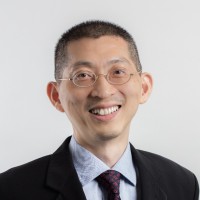
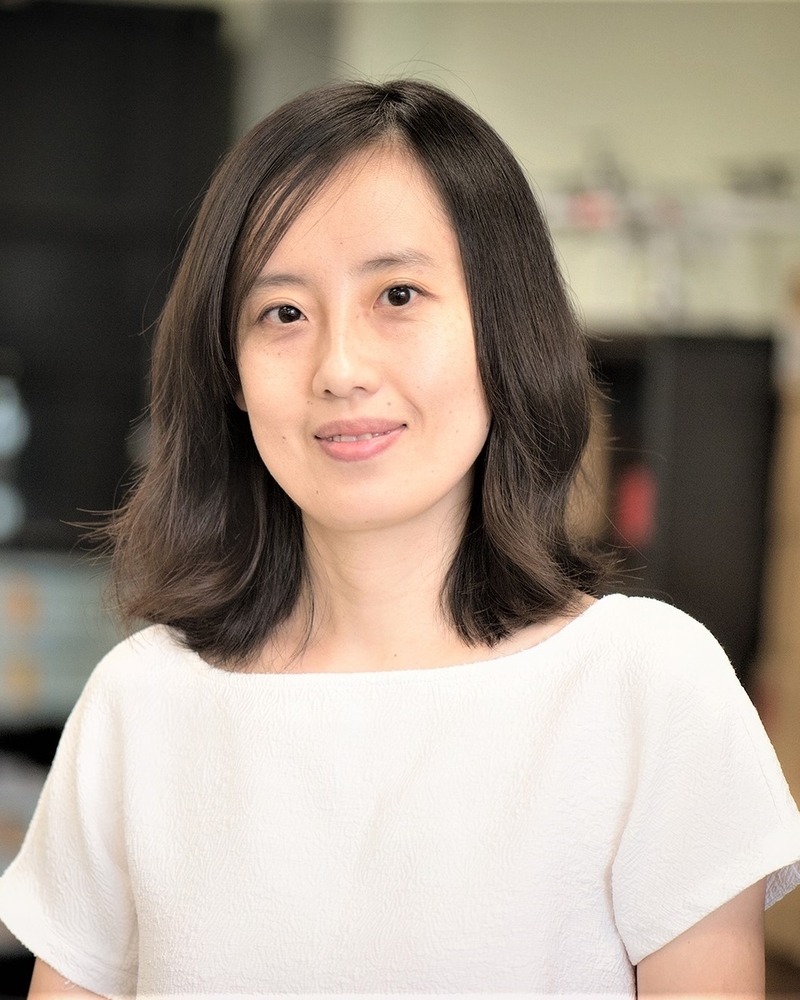
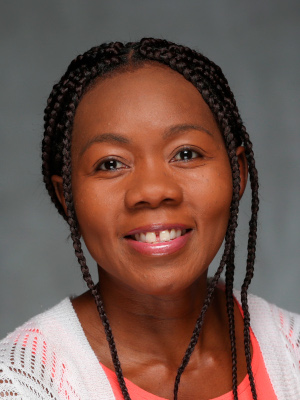
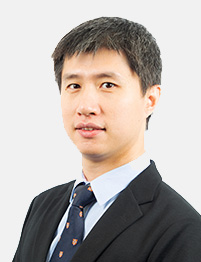

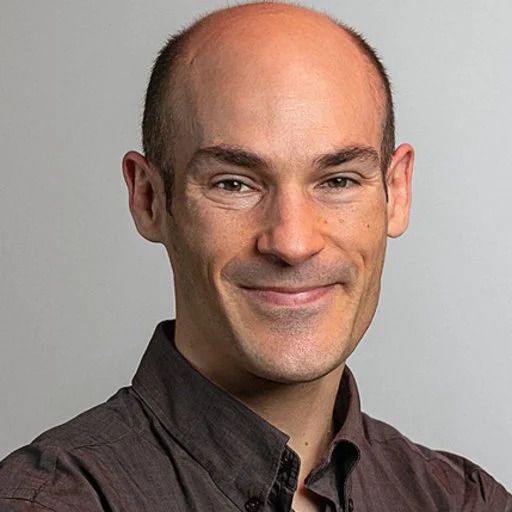
Moderator
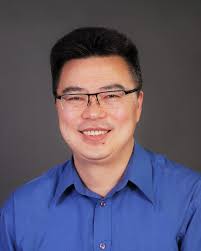
Panelist Biographies
Prof. Dr. Kiat Seng Yeo
FSAENG, FSNAS, FCAE, FIEEE, FAAET, FAIIA, FAAIA
Singapore University of Technology and Design
Professor Yeo has 37 years of experience in industry, academia, startups and consultancy. Currently, he is Advisor for Global Partnerships (President’s Office) and Director for Innovation and Enterprise (China) at the Singapore University of Technology and Design (SUTD), and Distinguished Professor at Tianjin University. Prof. Yeo is a widely known authority in low-power RF/mm-wave IC design and a recognized expert in CMOS technology. He has secured over S$70M of research grants as PI, published 14 books (4 Amazon Best Sellers), 7 book chapters, 700+ journal and conference papers, and holds 55 patents of which 27 are US patents. He is one of the rare 7 “double academicians” of the Singapore Academy of Engineering (SAEng) and the Singapore National Academy of Science (SNAS), and a Foreign Fellow of the Canadian Academy of Engineering (CAE). He received National Day Awards from the President of Singapore in 2009 and 2020. He was recognized among the Top 2% Scientists Worldwide by Stanford University from 2020 to 2025, World’s AI Top Scientist by the International Artificial Intelligence Industry Alliance in 2023, and Top Scholar by ScholarGPS from 2023 to 2025.
Dr. Yan Wu
A*STAR Institute for Infocomm Research (I2R), Singapore
Dr. Wu is the Deputy Head of the Robotics and Autonomous Systems Division at A*STAR, and Director of Graduate Affairs at A*STAR Graduate Academy. He received his BA(Hons) in Engineering from the University of Cambridge in 2007, and his PhD in Electrical Engineering from Imperial College London in 2013. He subsequently worked at the UCL Institute of Child Health and Great Ormond Street Hospital before joining I2R in December 2013. Dr. Wu is a Board Member of the IEEE Systems, Man and Cybernetics Society, Chair of the Singapore Chapter, and President of the Pattern Recognition and Machine Intelligence Association. He serves as Associate Editor for IEEE Transactions on Automation Science and Engineering, among other editorial boards. His research interests include dexterous manipulation, embodied robot learning and interaction, and service and assistive robotics.
Prof. Dr. Keeley Crockett
Manchester Metropolitan University, United Kingdom
Dr. Crockett is a Professor in Computational Intelligence at Manchester Metropolitan University with over 27 years of experience in ethical and responsible AI, computational intelligence algorithms, adaptive psychological profiling, fuzzy systems, and dialogue systems. She was a steering committee member for the UK Parliamentary Inquiry on Skills in the Age of AI, one of five EPSRC Public Engagement Champions, and a co-founder of the People Panel for AI funded by The Alan Turing Institute. Keeley was a collaborator on the AI Playbook for the UK Government and co-chaired the AI in Government and Academia Summit in September 2025. She is part of the International Agentic AI Safety Experts Focus Group and Chairs the UKRI’s AI and Robotics Strategic Advisory Team. She founded the IEEE Technical Committee SHIELD (2022-2024) and currently Chairs the IEEE CIS AI Ethics Education and Awareness Taskforce.
Distinguished Prof. Dr. Yan Wan
University of Texas at Arlington, United States
Dr. Wan is an Associate Fellow of AIAA and a Distinguished Professor in the Electrical Engineering Department at the University of Texas at Arlington. Her research spans modeling, evaluation, and control of large-scale dynamical networks; cyber-physical systems; stochastic networks; decentralized and learning-based control; and algebraic graph theory, with applications to urban aerial mobility, autonomous driving, robotic networks, air traffic management, and edge computing. She has received research support from NSF, ONR, ARO, NIST, DOE, Ford Motor Company, Toyota, Lockheed Martin, Dell Technologies, and MITRE Corporation. Her 250+ publications have been recognized with the NSF CAREER Award, RTCA William E. Jackson Award, IEEE Outstanding Contribution Award, and multiple best paper awards. She currently serves as a Board of Governors member for the IEEE Systems, Man, and Cybernetics Society.
Prof. Dr. Tayo Obafemi-Ajayi
Missouri State University, United States
Dr. Obafemi-Ajayi is the Guy Mace Professor of Electrical Engineering at Missouri State University and faculty director of the Computational Learning Systems lab. Her research focuses on developing explainable and ethical machine learning and AI algorithms for biomedical applications, with emphasis on multimodal data analysis to advance understanding of specific disease mechanisms. She is the 2024 MSU Atwood Excellence in Research and Teaching award recipient. She currently chairs the IEEE Computational Intelligence Society (CIS) Conference Strategic Planning subcommittee, previously chaired the IEEE CIS Technical Committee on Ethical, Legal, Social, Environmental and Human Dimensions of AI/CI (SHIELD) in 2025, and serves as Associate Editor of the Journal of Biomedical and Health Informatics.
Dr. Jose M. Alonso-Moral
CiTIUS-USC, Spain
Dr. Alonso-Moral holds a degree in Telecommunication Engineering and a PhD from the Technical University of Madrid. He is currently an Associate Professor at CiTIUS-USC, Chair of the IEEE-CIS Technical Committee on Ethical, Legal, Social, Environmental and Human Dimensions of AI/CI (SHIELD), and President of the European Society for Fuzzy Logic and Technology (EUSFLAT). He serves as Associate Editor of the IEEE Computational Intelligence Magazine and leads the Spanish project MAIXAI4TRUST. He was Deputy Coordinator of the H2020 NL4XAI project on Natural Language Technology for Explainable AI, and Local Organizer of ECAI2024. With 200+ publications, his research interests cover explainable and trustworthy AI, interpretable fuzzy systems, and natural language generation.
Prof. Dr. Ming Hou (Moderator)
FCAE, FEIC, FIEEE
University of Toronto, Canada
Dr. Hou is a Fellow of the Canadian Academy of Engineering, Engineering Institute of Canada, and IEEE. He is a Principal Scientist and National Leader at Defence Research and Development Canada, and an Adjunct Professor at the University of Toronto and University of Calgary. As a global authority in human-machine interaction, he is an Expert Advisor to the United Nations Institute for Disarmament Research and a Principal Advisor to the Chief Scientist Office of the world’s largest military alliance. His book “Intelligent Adaptive Systems: An Interaction-Centered Design Perspective” has guided international defence capabilities, military standards, and the UN White Paper on Human-Machine Interfaces in Autonomous Weapon Systems. Dr. Hou is a Leader of the IEEE AI Coalition Committee, IEEE SMC Distinguished Lecturer, and Honorary Chair of ICHMS 2026. He has delivered approximately 200 invited keynote and lecture presentations at prestigious international fora.