
The IEEE SMC 2026 BMI Workshop will feature keynote presentations, technical paper sessions, the BR41N.IO BCI Designers’ Hackathon, and several networking and social activities. Program details are provided below.
BMI Workshop Schedule
Unless otherwise noted, all events take place in “Grand Ballroom A“.
| Time | Program |
|---|---|
| 08:00–09:00 |
Launching BR41N.IO 2026 Global Hackathon Architecture and Hosting Network and BCI Technology Overview Christoph Guger · g.tec medical engineering GmbH |
| 09:00–10:00 |
BR41N.IO Technical Presentation Real-Time BCI Development: Hardware, APIs and Deployment David Reyes · g.tec medical engineering GmbH |
| 10:00–10:30 |
BR41N.IO Technical Presentation Available BCI Paradigms and Open Datasets: MI, P300, SSVEP and ECoG Sebastian Sieghartsleitner · g.tec medical engineering GmbH |
| 10:30–11:00 | Coffee Break |
| 11:00–12:00 |
BMI Workshop Keynote — Amy Orsborn, Ph.D. Predicting and Shaping User-device Interactions in Neural Interfaces University of Washington, USA |
| 12:00–13:00 |
BMI Workshop Keynote — Adam O. Hebb, MD, FRCSC, FAANS Neural Decoding to Clinical Action: A Neurosurgeon’s View of Adaptive Brain-Machine Interfaces University of Denver, USA |
| 13:00–24:00 | BR41N.IO BCI Designers' Hackathon |
| 14:00–16:00 | BMI Workshop “Walk and Talk” Networking Event (details coming soon) |
| 16:00–16:30 | Coffee Break (Hackathon continues) |
| 19:30–21:00 | IEEE SMC Opening Reception (Location TBD) |
| Time | Program |
|---|---|
| 06:00-12:00 | BR41N.IO BCI Designers' Hackathon Continues |
| 08:00–09:00 |
BCI Award Winner Presentations and Announcement of the Next BCI Award Christoph Guger · g.tec medical engineering GmbH Real-Time Brain-Controlled Selective Hearing Enhances Speech Perception in Multi-Talker Environments Vishal Choudhari · Columbia University, USA Cortical touch for brain-controlled bionic hands Giacomo Valle · Chalmers University, Sweden An implantable brain-spine interface restoring lower limb movements after complete spinal cord injury Valeria Spagnolo · EPFL, Switzerland |
| 09:00–10:00 | IEEE SMC Keynote II (Location TBD) |
| 10:00–10:30 | Coffee Break |
| 12:00–17:00 | BR41N.IO Project Presentations |
| 15:00–15:30 | Coffee Break |
| 17:30–18:30 | BR41N.IO Awards Ceremony |
| Time | Program |
|---|---|
| 08:15–09:00 |
BMI Workshop Paper Session #1 Recent Advances in Brain-Machine Interfaces I |
| 09:00–10:00 | IEEE SMC Keynote II (Location TBD) |
| 10:00–10:30 | Coffee Break |
| 10:30–12:00 |
BMI Workshop Paper Session #2 Active Brain-Machine Interfaces I |
| 12:15–13:15 | BMI Workshop Networking Lunch |
| 13:30–15:00 |
BMI Workshop Paper Session #3 Active Brain-Machine Interfaces II |
| 15:00–15:30 | Coffee Break |
| 15:30–17:00 |
BMI Workshop Paper Session #4 Passive Brain-Machine Interfaces and Neuroadaptive Systems |
| 10:30–12:00 | PhD Forum |
| 18:30–20:00 | IEEE SMC Banquet (Location TBD) |
| Time | Program |
|---|---|
| 08:15–09:00 |
BMI Workshop Paper Session #5 Recent Advances in Brain-Machine Interfaces II |
| 09:00–10:00 | IEEE SMC Keynote III (Location TBD) |
| 10:00–10:30 | Coffee Break |
| 10:30–12:00 |
BMI Workshop Paper Session #6 Hybrid and Multimodal Brain-Machine Interfaces |
| 12:00–13:30 | Lunch Break |
| 13:30–15:00 |
BMI Workshop Paper Session #7 Brain-Machine Interfaces in Healthcare and Rehabilitation |
| 15:00–15:30 | Coffee Break |
| 15:30–17:00 |
BMI Workshop Paper Session #8 Signal Processing, Reliability, and Computational Methods |
| 17:20–17:30 |
BMI Workshop Best Paper Awards Presentation |
| 17:30–19:30 | IEEE SMC Closing (Location TBD) |
Keynote Speakers
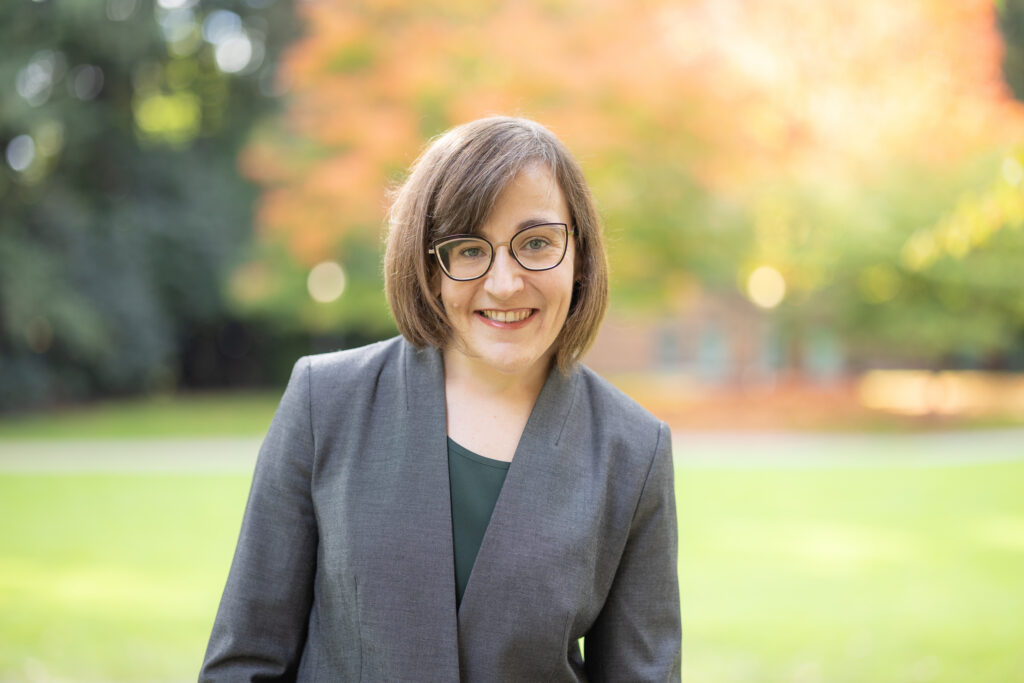
Amy Orsborn, Ph.D.
Cherng Jia and Elizabeth Yun Hwang Associate Professor
University of Washington
Dr. Orsborn is a Cherng Jia and Elizabeth Yun Hwang Associate Professor in the departments of Electrical & Computer Engineering and Bioengineering at the University of Washington. Her research explores sensorimotor plasticity in brain-computer interfaces and how plasticity is influenced by the algorithms used. She completed her Ph.D. at the UC Berkeley/UCSF Joint Graduate Program in Bioengineering and her postdoctoral training at NYU’s Center for Neural Science. She recently received the NSF CAREER award, a Sloan Fellowship, and was named an Emerging Leader by the American Institute of Medical and Biological Engineering.
Title: Predicting and Shaping User-device Interactions in Neural Interfaces
Abstract: Neural interface technologies provide new opportunities to assist and augment human behaviors. For instance, muscle activity can be transformed into commands for an assistive device for people with disabilities or provide richer control for a computer than interfaces like mice and keyboards. Connecting signals from the nervous system to an external device in this way presents users with a new, potentially unintuitive, mapping between their movements and those of the device. Users often change their behavior as they learn to control neural interfaces, and many neural interfaces leverage machine learning to let the device adapt to the users. This co-learning creates complex and high-throughput interactions between algorithms and the nervous system. In my talk, I will present recent research in my lab demonstrating that the algorithms we use in neural interfaces influence neural computations and user learning. I will then present new computational frameworks we’ve developed to predict and shape user-algorithm interactions. These discoveries open possibilities to build neural interfaces that intelligently interact with the nervous system to assist and rehabilitate motor function across diverse users and applications.
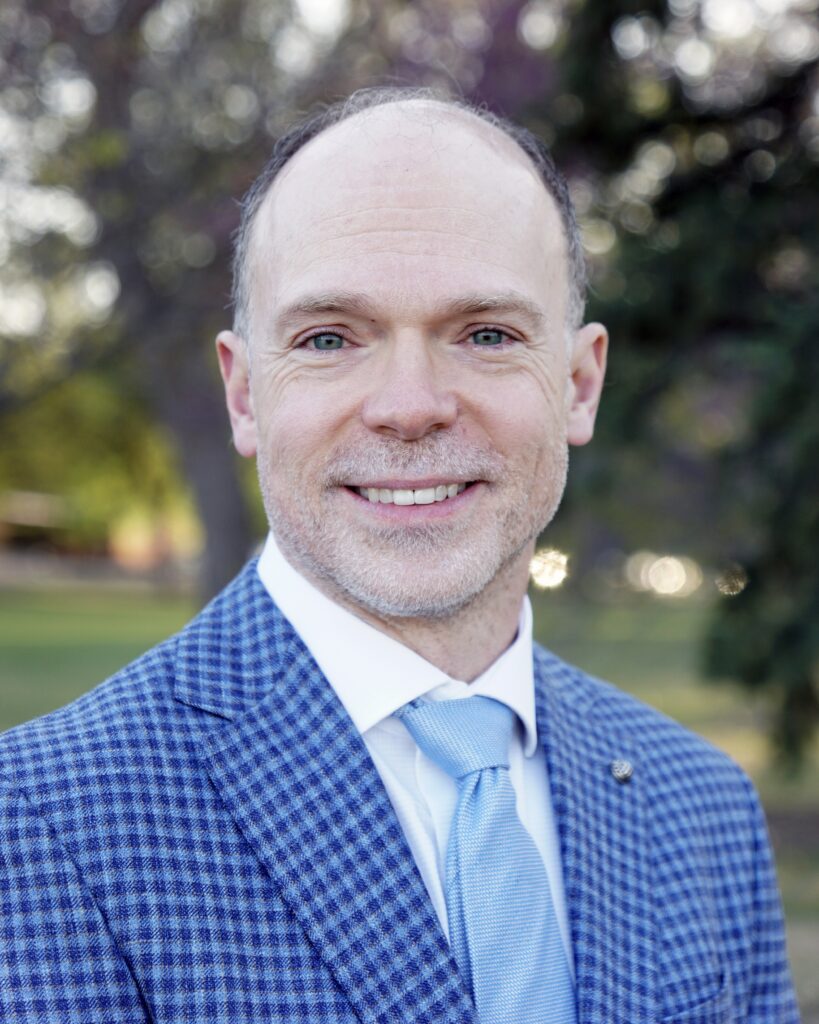
Adam O. Hebb, MD, FRCSC, FAANS
Neurosurgeon, Colorado Permanente Medical Group
Research Associate Professor, University of Denver
Adam O. Hebb, MD, FRCSC, FAANS, is a neurosurgeon with Colorado Permanente Medical Group and Research Associate Professor at the Knoebel Institute for Healthy Aging, University of Denver. After his medical education at Dalhousie University in Halifax, he trained in neurosurgery at the University of Minnesota and completed fellowship training in neuro-oncology and epilepsy surgery at the University of Washington. His clinical work includes deep brain stimulation for movement disorders, stereoelectroencephalography, stereotactic robotics, and MRI-guided laser interstitial thermal therapy for epilepsy and brain tumors. His research focuses on human electrophysiology, closed-loop neurostimulation, and decoding behavior from subthalamic nucleus local field potentials using machine learning. He has collaborated with engineering groups on adaptive DBS and brain-machine-interface development and is an inventor on a patent for motor task detection using electrophysiological signals. He is also pursuing a JD at the University of Denver Sturm College of Law, reflecting a broader interest in the regulatory, commercial, and health-system pathways needed to bring emerging neurotechnology from the laboratory and operating room into real-world clinical use.
Title: Neural Decoding to Clinical Action: A Neurosurgeon’s View of Adaptive Brain-Machine Interfaces
Abstract: Brain-machine-interface engineering often begins with a signal. Neurosurgery begins with a patient, anatomy, a trajectory, and a decision that must be safe enough to make in the operating room. This keynote tells the story of BMI translation from that clinical vantage point. Drawing on work in deep brain stimulation, stereoelectroencephalography (SEEG), chronic subthalamic nucleus local field potential recording, and machine-learning approaches to behavior recognition, I will discuss what human brain signals look like when they are acquired through real implanted systems rather than idealized channels. The talk connects three clinical realities: stereotactic access to the brain, decoding behavior and disease state from noisy neural recordings, and adaptive neuromodulation that updates therapy according to the patient’s current state and goal. The aim is to give BMI engineers a practical neurosurgical framework for designing systems that are not only accurate in analysis, but useful, safe, and durable in patients.
Paper Sessions
* Indicates a presentation that will be delivered by pre-recorded video.
Chair: Ivan Volosyak | Co-Chair: Tiago Falk
| Paper | Title | Authors |
|---|---|---|
| 100 | Towards Enhanced Information Transfer rates in SSVEP-Based BCIs Using Conway’s Game of Life as Visual Overlay | Atilla Cantürk, Ivan Volosyak |
| 2330 | SSVEP Chess: A Brain-Controlled Illuminated Puzzle Board | Atilla Cantürk, Ivan Volosyak |
| 2336 | Single-Stimulus SSMVEP for EEG Biometrics: An Identification Study | Ayas Kiser, Alexander Szameitat, Ivan Volosyak |
Chair: Tiago Falk | Co-Chair: Ivan Volosyak
| Paper | Title | Authors |
|---|---|---|
| 237 | Reliable Asynchronous Control in MI BCIs: An Unsupervised Spatial Focalisation Gating for Intentional Non-Control | Paolo Forin, Stefano Tortora, Emanuele Menegatti, Luca Tonin |
| 271* | IFANet: An Interactive Frequency Attention Network for EEG Motor Imagery Decoding | Yuan Zhou, Weina Zhu |
| 358 | A Comparative Analysis of SVD-Enhanced FBCCA for High-Speed SSVEP-BCI Communication | Sofie Marie Møller Nielsen, Linn Marie Ploug, Sadasivan Puthusserypady |
| 1093* | MTCANet: A Multi-scale fusion Temporal Convolution and Multi-level Attention-based network for EEG-Based Motor Imagery Classification | Shangge Li, Yuan Yao, Ya Zhang |
| 1406* | Intra-Class Representation Regularization for EEG Motor Imagery Classification | Roger Krishna B J, Amritavarshini S, Veena K |
| 2148 | Characterization of Speech Imagery in Scalp EEG and Comparison with Motor Imagery | Bob Van Dyck |
Chair: Yaoping Hu | Co-Chair: Yogesh Meena
| Paper | Title | Authors |
|---|---|---|
| 525 | RAG-based EEG-to-Text Translation Using Deep Learning and LLMs | Enrico Collautti, Xiaopeng Mao, Luca Tonin, Stefano Tortora, Sadasivan Puthusserypady |
| 1259 | Characterizing Classifier and Paradigm Behavior Across the SpeedAccuracy Trade-Off in P300-Based BrainComputer Interfaces | Javier Jiménez, Francisco B. Rodriguez |
| 1374 | Towards simultaneous decoding of kinetic and kinematic movement parameters during grasp and lift task by non-invasive brain imaging | Parth Dangi, Yogesh K. Meena |
| 1714 | EEGForceFusion: Joint TokenisedContinuous Representation Learning for Subject-Independent Grasp Force Decoding | Sankalp Turankar, Yogesh K. Meena |
| 2094 | Cross-Subject Semantic Decoding with Shared-Space Alignment for Generalized Neural Representation Learning | Ji-hoon Heo, Aleksandra Wisniewska, Seo-Hyun Lee, Seong-Whan Lee |
| 786* | Introducing Spatiotemporal Topological Modeling Aids in Visual Decoding | Hongyi Liu, Xuxuan Xie, YuChen Guo, youyong Kong |
Chair: Domenico Lofù | Co-Chair: Paolo Sorino
| Paper | Title | Authors |
|---|---|---|
| 299 | Cognify: A Mobile-Optimized Edge Architecture for 4-Channel EEG Cognitive State Classification | Alessia Ioana Brinzarea Iamandi |
| 668* | Subject-Specific Analysis of Self-Initiated Attention Shifts from EEG with Controlled Internal and External Attention Conditions | Yuwen Zeng, Dengzhe Hou, Zhang Zhang, Sun Sai, Yongsong Huang, Chia-huei Tseng, Satoshi Shioiri |
| 951 | Cognitive Energy Modeling for Neuroadaptive Human-Machine Systems using EEG and WGAN-GP | Sriram Sattiraju, Vaibhav Gollapalli, Aryan Shah, Timothy McMahan |
| 1476 | A Dyadic Neuroadaptive System for EEG-Based Affective State Fusion and Multimodal Generation | Tommaso Colafiglio, Angela Lombardi, Domenico Lofù, Paolo Sorino, Tommaso Di Noia |
| 1806* | Decoding Error-Related Potentials under Multisensory Feedback with Varying Congruency | Yixin Liu, Kang Yin, Hye-Bin Shin, Seong-Whan Lee |
| 2600 | EEG Cognitive State Machine: A Modular Framework for Design-Time Experimentation and Run-Time Neurofeedback in Puzzle Games | Vitor Inserra, Richard Lee Marks |
Chair: Ivan Volosyak | Co-Chair: Sarah Power
| Paper | Title | Authors |
|---|---|---|
| 1415 | Evoking Behavior-Oriented Neural Population Patterns by Intracortical Microstimulation | Song Kang, Shenghui WU, Mingdong Li, Zixu WANG, Ziyi WANG, Yiwen Wang |
| 1663* | CSSBFM: A Brain Foundation Model Based on Cross-Scale Spatiotemporal Structure for Heterogeneous EEG Tasks | Xiao Chen, Lianghua He, Haiyang Lu |
| 256* | NeuroGenLLM: A Fast Spiking Neural Architecture Generation Framework via LLM-Guided Search | Yue Zhong, Zhijie Yang, Chao Xiao, Renzhi Chen, ShaSha Guo, Rui Gong, Mingche Lai, Lei Wang |
Chair: Yogesh Meena | Co-Chair: Sarah Power
| Paper | Title | Authors |
|---|---|---|
| 314* | A Brain-Eye-Hand Multimodal Human-Robot Interface: Design an Validation | Hongxin Li, Zhu Pengming, Yaru Liu, yiming Hu, Junhao Xiao, Zongtan Zhou |
| 1361* | AsymHRF-Net: Physiologically Constrained Asymmetric Fusion of EEG and fNIRS for Subject-Independent Brain-Computer Interfaces | ZHENGYANG DING, Peicong Wu, Xiyao Tang |
| 1427 | SwitchBraidNet:Quantisation-aware lightweight architecture for hybrid brain-computer interface | Gourav Siddhad, Yogesh K. Meena |
| 1697 | A Hybrid GazeMotor Imagery BCI Framework for Effective Decision Communication | Gowtham Reddy Nimmalapalli, KongFatt Wong-Lin, Yogesh K. Meena |
| 1707 | A Multi-Objective Optimisation Framework for Corticomuscular EEG-EMG Pair Selection in Hybrid BCI | Muni Kumar Dekka, Yogesh K. Meena |
| 2417* | EGPFNet: Expert-Guided Multimodal Progressive Fusion for Multi-Talker Target Speech Extraction | Jianing Zhang, Hongyang Xie, Zhihui Yang, Yang Wang, Mengyu Qiao |
Chair: Paolo Sorino | Co-Chair: Domenico Lofù
| Paper | Title | Authors |
|---|---|---|
| 159 | BCI-Based Assessment of Ocular Response Time Using Dynamic Time Warping Leveraging an RDWT-Driven Deep Neural Framework | Shantanu Sarkar, Sai Shashank Gandavarapu, Jeff Feng, Saurabh Prasad, Reza Khanbabaie, Jose Contreras-Vidal |
| 583 | Temporal Generalization in fNIRS-Based Autism Classification: A Cross-Time-Window Transfer Benchmark | Marios Petrov, Sahana Vinayak, Frederick Shic, Adham Atyabi, Targol Bakhtiarvand, Kevin Pelphrey, Moses Smith Guddah |
| 691* | SA-HGNN: Sample-Adaptive Hyperbolic Graph Neural Network for EEG-Based Depression Recognition | Yang Li, Pan Hu, Yan Zhang, Wenfan Yang, Wu Tao, Lianbo Guo |
| 744* | FNIRS-CTPDNet: A Neurophysiology-Guided CNN-Transformer Framework for Computer-Aided Parkinson’s Disease Classification from FNIRS | Li-Dan Kuang, jingyi jiang, Ying Xiong, Jin Zhang, Jian-Ming Zhang, Xiao-Yong Tang, Hang Chen |
| 775 | Three-Stage WAR-BCI Control of a Lower-Limb Exoskeleton for Stroke Rehabilitation | Congying He, Kai-Hsiang Su, Ke-Wei Tung, Po-Hsun Cheng, Chia-Hsin Chen, Li-Wei Ko |
| 1291 | Predicting impulsivity scores in ADHD and typically developing children using EEG and Machine Learning | YU CHI Zheng, Li-Wei Ko, Liang-Jen Wang |
Chair: Hubert Cecotti | Co-Chair: Xiang Zhang
| Paper | Title | Authors |
|---|---|---|
| 724 | MWC-GAN: A Hybrid Multiscale Wavelet-Domain Conditional GAN for EOG Artefact Removal from EEG Signals | Aswin Sekhar C S, Jijomon Chettuthara Moncy, Vinod A. P. |
| 927 | Temporal and Spatial EEG Data Augmentation for Single-Trial Detection during a Rapid Serial Visual Presentation Task | Midhun Puthiyelath, Hubert Cecotti |
| 998 | SA-Chunk: Document Segmentation approach Based on Two-Level Semantic Feature Aggregation | Liedong Guo, Jian Xu |
| 1039 | What Causes Performance Degradation in Cross-Subject EEG Classification? | Yihe Wang, Taida Li, Yujun Yan, WenZhan Song, Xiang Zhang |
| 2152 | EU-TTR: A Framework for Epistemic Uncertainty and Test-Time Reliability Assessment for EEG based Deep Learning Models | Bhavesh Kapil, Elisabeth Wetzer, Sneha Singh, Arnav Bhavsar |
| 2494 | nASR: An End-to-End Trainable Neural Layer for Channel-Level EEG Artifact Subspace Reconstruction in Real-Time BCI | Shantanu Sarkar, Jose Contreras-Vidal |