
Honorary Chairs

Dr. Michael H. Smith
Dr. Michael H. Smith received the M.S., M.B.A., and Ph.D. degrees from the University of California at Berkeley, Berkeley, CA, USA. He is currently the Chairman of the Board of Furaxa, Inc., Orinda, CA, USA, a biotech company, and a Visiting Scholar with the University of California at Berkeley, Berkeley, CA, USA. His research interests include the development of low-cost, real-world brain–computer interface Systems, AI, and robotics. Dr. Smith was a recipient of the IEEE SMC Joseph G. Wohl Outstanding Career Award.
Dr. Ljiljana Trajkovic
Dr. Ljiljana Trajkovic (FIEEE) received the Dipl. Ing. degree from University of Pristina, Yugoslavia, the M.Sc. degrees in electrical engineering and computer engineering from Syracuse University, Syracuse, NY, and the Ph.D. degree in electrical engineering from University of California at Los Angeles. She is currently a professor in the School of Engineering Science, Simon Fraser University, Burnaby, British Columbia, Canada. Her research interests include communication networks and dynamical systems.
General Chairs

Dr. Ivan Volosyak
Dr. Ivan Volosyak is a Professor of Biomedical Engineering at Rhine-Waal University of Applied Sciences, Germany. His main research topics are brain-computer interfaces, signal processing and assistive technology with a focus on applications in spinal cord injury rehabilitation. He was previously a Project Manager of several national and European Union projects at the Institute of Automation, University of Bremen. He regularly organises the BCI-related Special Sessions at IWANN and IEEE SMC conferences.

Dr. Sarah D. Power
Dr. Sarah D. Power completed a B.Eng. in Electrical Engineering from Memorial University in 2006, followed by an M.A.Sc. and a Ph.D. in Biomedical Engineering from the University of Toronto, focusing on near-infrared spectroscopy (NIRS) for brain-computer interfaces. She is an assistant professor in the Faculty of Engineering and Applied Science and the Faculty of Medicine of Memorial University, Canada. Her research interests include signal processing and pattern recognition for medical applications.
BR41N.IO Hackathon Chair
Dr. Christoph Guger
Dr. Christoph Guger studied electrical and biomedical engineering at the University of Technology Graz in Austria and Johns Hopkins University in the USA and received his PhD in 1999. In 1999 he started the company g.tec which has now branches in Austria, Spain, the USA, Canada, Japan and Hong Kong. g.tec produces high-quality neurotechnology and real-time brain computer interfaces for the research, medical and consumer market. The company is active in many international research projects about brain-computer interfacing, neuromodulation, stroke rehabilitation, assessment and communication with patients with disorders of consciousness and high-gamma mapping in epilepsy and tumor patients.
Technical Co-Chairs

Dr. Tiago H. Falk
Dr. Tiago H. Falk (FIEEE) received the BSc degree from the Federal University of Pernambuco, Brazil, in 2002, and the MSc and PhD degrees from Queen’s University, Canada, in 2005 and 2008, respectively, all in electrical engineering. In 2007, he was a visiting Research Fellow at the Sound and Image Processing Lab, Royal Institute of Technology (KTH), Sweden, and in 2008 at the Quality and Usability Lab, Deutsche Telekom/TU Berlin, Germany. From 2009-2010 he was an NSERC Postdoctoral Fellow at Holland-Bloorview Kids Rehabilitation Hospital, affiliated with the University of Toronto. Since 2010, he has been an Assistant Professor at the Institut National de la Recherche Scientifique (INRS) in Montreal.

Dr. Yogesh K. Meena
Dr. Yogesh K. Meena is an Assistant Professor in the Department of Computer Science at IIT Gandhinagar, where he has been leading the Human-AI Interaction (HAIx) Lab since February 2023. His lab focuses on developing intelligent, transparent, and user-centric human-machine interaction systems. He received his B.Tech. and M.Tech. degree in information technology from the IIITM Gwalior, in 2010 and a PhD in computer science from Ulster University, UK, in 2018. Dr Meena’s research operates at the intersection of human–machine interaction, cyber-physical systems, machine learning, and neuroscience, with strong contributions at both foundational and applied levels.

Dr. Abhishek Tiwari
Dr. Abhishek Tiwari is a Research Associate at Joint Research Unit on Cybersecurity and Digital Trust, INRS-UQO working on evaluating biases in cognitive models. Before starting his current position, he worked at Myant as a Lead Data Scientist working on psycho-physiological modelling of astronauts using data collected with smart textiles. He received his B. Tech. and M. Tech. from Indian Institute of Technology, Kharagpur in Engineering Product Design and Manufacturing with specialization in Industrial Electronics in 2016. Following this, he completed his PhD in Biomedical Signal Processing at Institut National de la Recherche Scientifique (INRS), University of Quebec, Montreal under Prof. Tiago H. Falk (MuSAE Lab).

Dr. Hubert Cecotti
Dr. Hubert Cecotti is currently an Associate Professor in the Department of Computer Science at the College of Science and Mathematics at Fresno State, Fresno, CA, USA. He received the MSc and PhD degrees in computer science from the University of Lorraine, Lorraine, France, in 2002 and 2005, respectively. In 2010, he was a researcher at the Gipsa-Lab CNRS, Grenoble, France, where he worked on sensor selection and spatial filtering for the P300 BCI. From 2011 to 2013, he worked on EEG signal processing and machine learning. His current research interests include pattern recognition, human-computer interaction with eye-tracking and virtual reality, and brain-computer interfaces.

Dr. Domenico Lofù
Dr. Domenico Lofù is an Assistant Professor at Polytechnic University of Bari, Italy. He obtained his PhD in Information Engineering from the Department of Electrical and Information Engineering (DEI), Polytechnic University of Bari, Italy, in December 2022. From 2019 to 2023, he worked as a Security and AI Researcher at Innovation Lab (ILAB) of Exprivia S.p.A., Italy. He has contributed to several European and national projects, and serves on the TPC of several conferences and works on several EU projects. His main research interests lie in the application of Artificial Intelligence (AI) techniques and methods in the Information Security & Privacy, IoT, Healthcare and BMI domains.
Special Sessions Chair
Dr. Yaoping Hu
Dr. Yaoping Hu (Dept. of Electrical and Software Engineering, University of Calgary, Canada) is a leading expert in Human-Computer Interaction with virtual/augmented/mixed reality (XR) technologies. Her current research activities embrace brain-machine interfaces (BMI) for cognitive ergonomics, focusing on pattern extraction/modelling of spatiotemporal brain signals and visuo-haptic collaborative interaction within XR. These activities have generated methodologies/knowledge essential for measuring and assessing cognitively ergonomic user interaction for various BMI and XR applications. Prof. Hu served as a member of the IEEE SMC Board of Governors and of the IEEE SA Working Group of Unified Terminology for Brain-Computer Interfaces, and as vice-chair for finance of the IEEE RAS Technical Committee on Haptics.
PhD Forum Chairs
Dr. Xiang Zhang
Dr. Xiang Zhang is an Assistant Professor in the Department of Computer Science at the University of North Carolina at Charlotte. Before joining UNC Charlotte, he was a postdoctoral fellow at Harvard University from March 2020 to July 2022. Xiang received his Ph.D. degree (in 2020) in Computer Science from the University of New South Wales (UNSW). His research interests lie in data mining and machine learning with applications in pervasive healthcare, medical time series, and Brain-Computer Interfaces (BCIs).
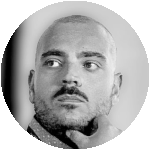
Dr. Paolo Sorino
Dr. Paolo Sorino is a Post-Doctoral Researcher at the Polytechnic University of Bari, Italy. He obtained his PhD in Information Engineering from the Department of Electrical and Information Engineering (DEI), Polytechnic University of Bari, Italy, in February 2025. He was a Researcher at IRCCS Saverio de Bellis, Castellana Grotte, where he worked on the analysis of epidemiological data using AI techniques. His main research interests lie in the application of AI and ML for the diagnosis and detection of diseases, and in the development of decision support systems.
Outreach Chair
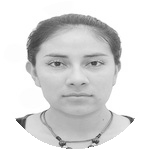
Ximena G. Cely
Ximena G. Cely received her electronic engineering B.Sc. from Universidad Pedagógica y Tecnológica de Colombia (2021), and her M.Sc. in Electrical Engineering at the Federal University of Espirito Santo, Brazil (2023). She is currently pursuing a Ph.D. in Electrical Engineering at the same university. She has participated in different academic exchanges in Mexico (2018), Canada (2022), and Germany, at the Charite, Berlin (2024-present). Her research interests are focused on brain-computer interfaces, biomedical signal processing and analysis, machine learning approaches, and instrumentation and control of assistive and rehabilitation devices.