
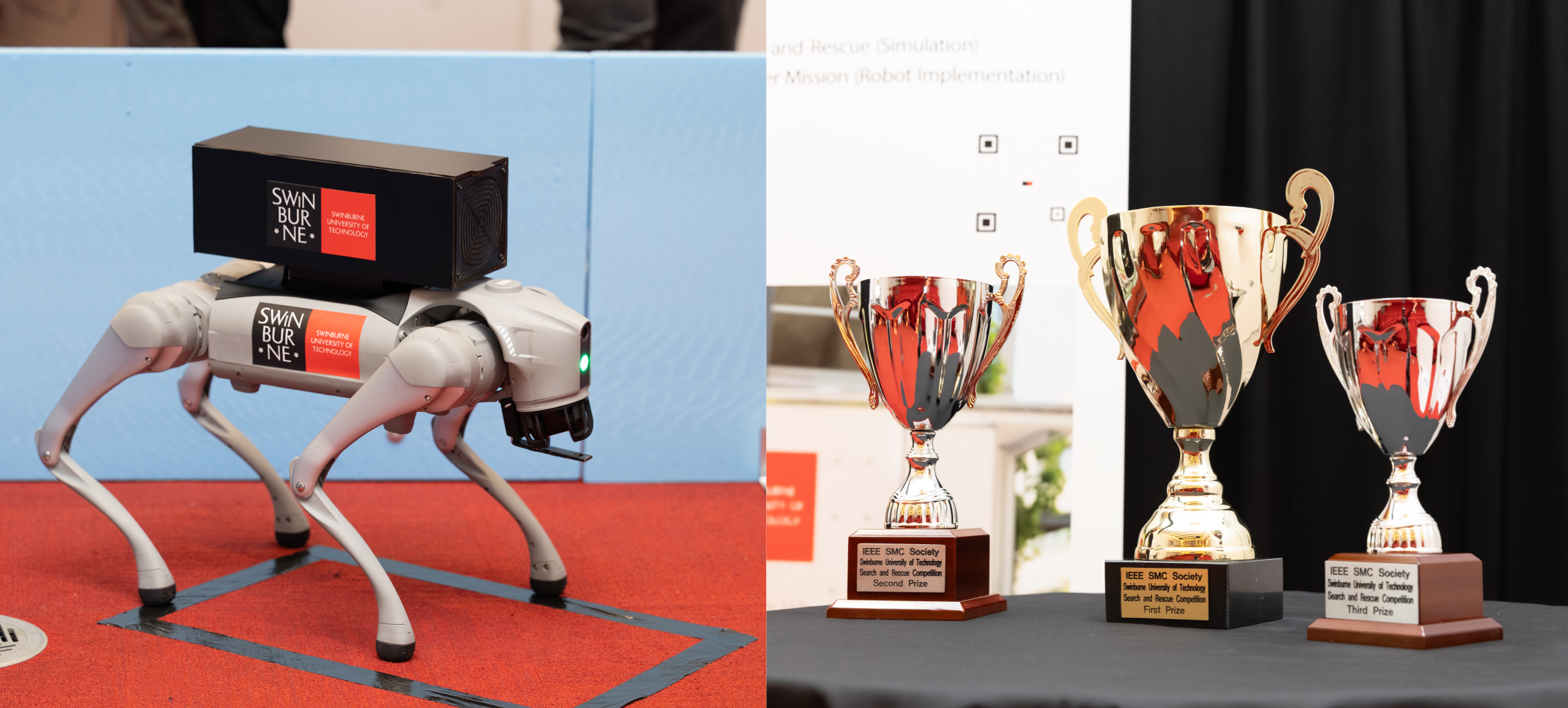
🏆 Prizes
🥇 1st Prize: AUD 20,000
🥈 2nd Prize: AUD 10,000
🥉 3rd Prize: AUD 5,000
The IEEE Systems, Man, and Cybernetics Society (SMCS) and Swinburne University of Technology invite undergraduates, young researchers (postgraduate research students and early-career researchers who have graduated within the past five years) worldwide to participate in the 2026 IEEE SMCS Open-Source Search and Rescue (SAR) Competition. This exciting two-phase challenge is designed to advance innovation in autonomy, artificial intelligence and robotics.
This competition offers a unique opportunity to design, build, and test intelligent machine–machine teaming solutions—from simulation to real-world implementation.
Awards and Recognition
Competition Structure
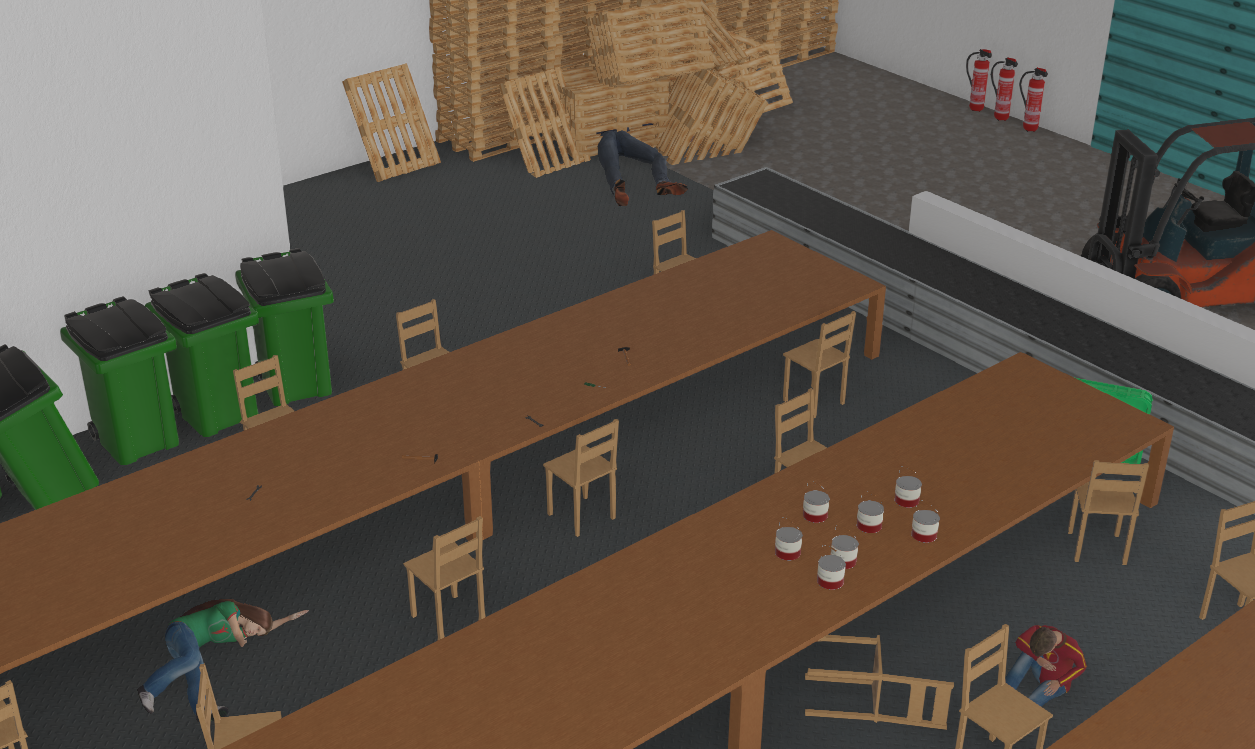
Phase 1: Multi-UGV Search-and-Rescue Simulation
Teams will design autonomous agents to control a fleet of uncrewed ground vehicles (UGVs) in a Webots-based search and rescue simulation environment.
Agents must:
- Analyze and extract information from pre-recorded flyover footage of the disaster scene
- Plan the mission execution using the information extracted from the flyover footage
- Execute the search-and-rescue mission using the fleet of UGVs to explore the environment and locate victims
Deliverables: Software solution, simulation logs, and an online pitch explaining coordination strategies, justification methods, and scalability.
Phase 2: Real-World Disaster Mission
Teams will deploy a fleet of UGVs provided by the organisers in a physical mock-up “disaster scene” featuring hazards and obstacles.
Tasks include:
- Victim localization and condition reporting.
- Hazard-aware navigation.
- Identification and reporting of special hazards.
- Technical presentation of the proposed solution and algorithms
Key Dates
Call for participation
Release of Phase 1 simulation environments
Phase 1 submission deadline
Phase 1 online pitch
Announcement of finalists and release of Phase 2
Teams develop and prepare Phase 2 solutions
Phase 2 on-site competition event
Who Can Participate?
Each team must consist of 2 – 4 students with a staff member as an advisor. Eligible staff members include faculty members, research fellows and post-docs in universities or research institutions. Both undergraduate and postgraduate students are welcome to compete. Lastly, to be eligible to receive prize money at the end of Phase 2 all team members must be registered IEEE SMCS members.