
🏆 Prizes
- 🥇 1st Prize: AUD 20,000
- 🥈 2nd Prize: AUD 10,000
- 🥉 3rd Prize: AUD 5,000
The IEEE Systems, Man, and Cybernetics Society (SMCS) and Swinburne University of Technology invite young researchers (postgraduate research students and early-career researchers who have graduated within the past five years) worldwide to participate in the IEEE SMCS Open Source AI-Empowered Human–Machine Teaming (HMT) Competition. This exciting two-phase challenge is designed to advance innovation in autonomy, artificial intelligence, robotics, and human–machine interaction.
This competition offers a unique opportunity to design, build, and test intelligent human–machine teaming solutions—from simulation to real-world implementation.
Submissions have closed!
Awards and Recognition
Competition Structure
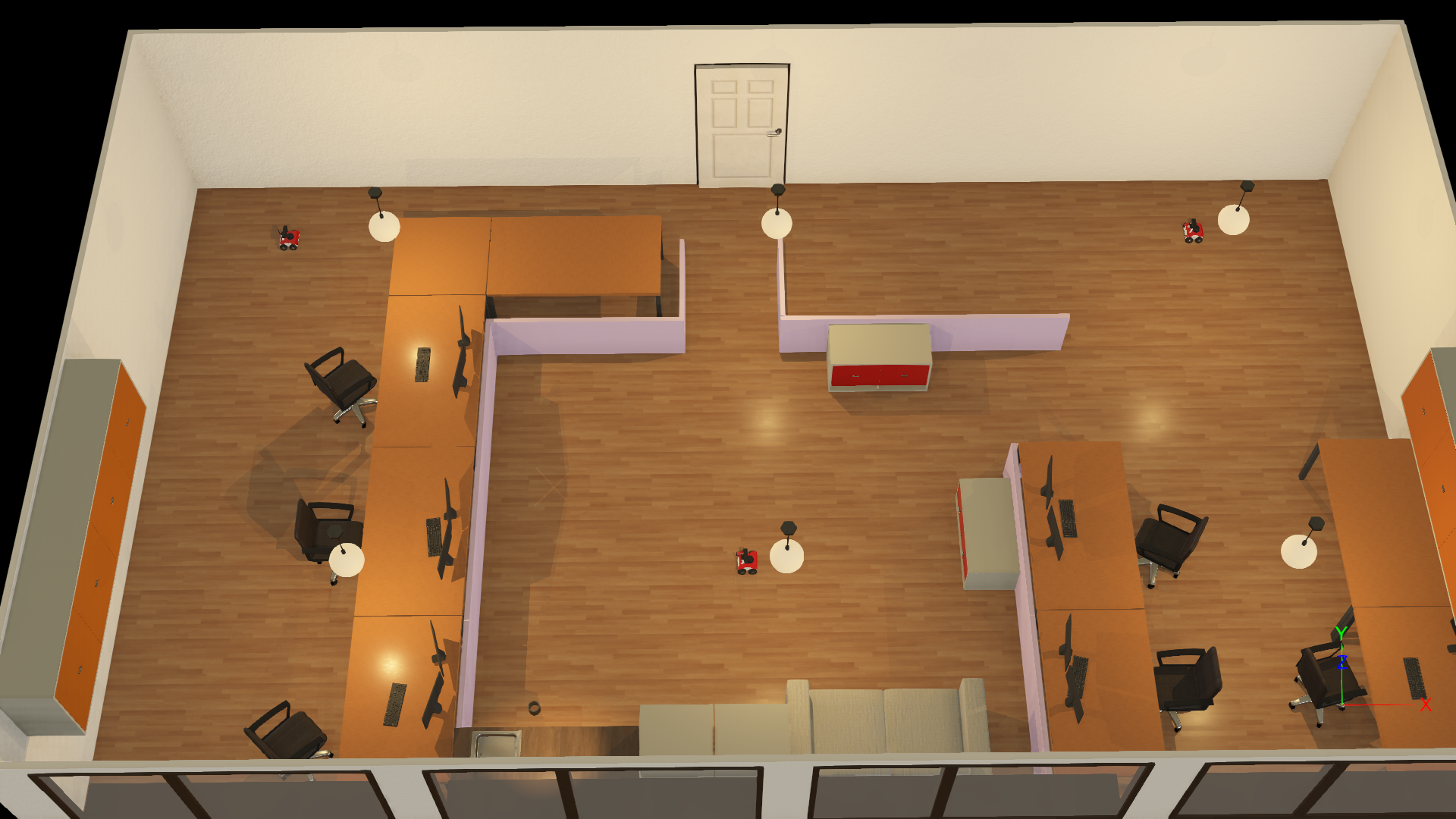
Phase 1: Multi-UGV Search-and-Rescue (Simulation)
Teams will design autonomous agents to control a fleet of uncrewed ground vehicles (UGVs) in a Webots-based simulated search and rescue (SAR) environment.
Agents must:
- Explore the environment, locate victims and generate a mission report.
- Provide human-readable justifications for proposed actions.
- Handle human supervisor overrides and re-plan accordingly.
Deliverables: Software solution, simulation logs, mission report, and an online pitch explaining coordination strategies, justification methods, and scalability.
Phase 2: Real-World Disaster Mission (Robot Implementation)
Teams will deploy a fleet of UGVs provided by the organisers in a physical mock-up “disaster scene” featuring hazards and obstacles.
Tasks include:
- Victim Localisation & Condition Reporting.
- Hazard-Aware Navigation.
- Rescue Supply Retrieval.
- Explainable Decision-Making & Evacuation/Containment Protocol.
Who Can Participate?
Each team must consist of 2–4 postgraduate research students and/or early-career researchers (e.g., Faculty Members, Research Fellows, Research Assistants, Research Scientists, Research Engineers, etc., in universities or research institutions) who have graduated within the past five years from their most recent degree, supported by an Advisor.
Key Dates
Registration Opens
Phase 1 Submission Deadline
Online Pitch
Phase 2 Challenge